

Posted by American Safety Associates, LLC on Jul 28th 2026
Best Rain Gear for Outdoor Work: Industrial Buyer's Guide
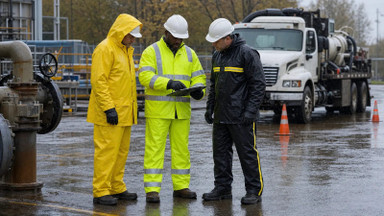
The best rain gear for outdoor work is not one jacket or suit for every crew. The right choice depends on how long workers are exposed, how much they move, whether they work near traffic or equipment, and whether rain is the only hazard. For general wet-weather work, PVC or PVC/polyester rain suits provide practical full-body coverage. For roadway, utility, and active yard work, ANSI-rated high-visibility rainwear may be necessary. Workers who climb, crouch, or handle materials continuously may benefit from lighter, more-flexible polyurethane-coated rainwear.
Safety managers and procurement teams should begin with the task rather than the garment color. A yellow rain suit may be easy to see, but that does not automatically make it ANSI-compliant. A heavy rain suit may block water well, but it can also restrict movement or trap heat. Use this guide to compare industrial rain suits by workplace application, material, visibility, and coverage.
Best Outdoor Work Rain Gear by Use Case
The following selections are based on published product specifications and intended applications. They are not the results of independent laboratory or wear testing. Buyers should verify current labels, certifications, sizes, and hazard compatibility before issuing any garment.
Best Match for Economical General Wet Work
The H.3O 3-Piece PVC Rain Suit is a practical choice for facility maintenance, sanitation, pressure washing, equipment cleaning, construction support, and municipal crews that need broad rain coverage at an economical cost.
Its .35 mm PVC/polyester construction includes a jacket, detachable hood, and bib-style pants. A storm-fly front, flapped pockets, adjustable suspenders, cape-back ventilation, and underarm vents support everyday wet-work use. The yellow color improves basic visibility compared with dark clothing, but this model should not be treated as ANSI high-visibility apparel unless the garment label states otherwise.
Best fit:
- General rain and wet-jobsite protection
- Pressure washing and non-hazardous equipment cleaning
- Facility and municipal maintenance
- Bulk crew programs where cost and full coverage matter
Best Match for Roadway and Equipment Visibility
For workers exposed to traffic, construction vehicles, forklifts, or low-light yard operations, select rainwear that carries the required ANSI/ISEA label. The ANSI Class 3 High Visibility Rain Suit combines a Type R Class 3 jacket with Class E pants, reflective striping, and waterproof construction.
This configuration is more appropriate than placing an ordinary vest over a rain suit when the outer layer itself must provide compliant visibility. Always confirm the label and performance class required by the workplace assessment. The current approved U.S. high-visibility apparel standard is ANSI/ISEA 107-2020; ISEA began public review of a proposed revision in 2026, but a draft revision should not be treated as an approved standard.
Best fit:
- Roadway and traffic-control crews
- Utilities and public works
- Loading yards and distribution operations
- Outdoor work around mobile equipment
For a deeper visibility discussion, read Florida hi-vis rainwear for demanding crews.
Best Match for Wet Cleaning and Non-Hazardous Splash
The Hydroblast 2-Piece Rain Suit uses a three-ply PVC/polyester/PVC construction and combines a jacket with bib-style pants. Adjustable suspenders, wrist and ankle closures, an attached hood, and nonmetallic hardware make it useful for wet cleaning, farming, maintenance, and other messy outdoor tasks.
Use this type of rainwear only within its published limitations. General waterproof or splash-resistant construction does not establish protection against corrosive, toxic, or otherwise hazardous chemicals. Chemical exposure requires manufacturer compatibility data and a hazard-specific clothing selection.
Best fit:
- Wet cleaning and washdown support
- Agriculture and outdoor maintenance
- Non-hazardous liquid splash
- Jobs needing adjustable wrist and ankle closures
Best Match for Dark Uniforms and Delivery Work
The Black Waterproof Rain Suit uses nylon/PVC construction with fully taped seams and includes a jacket, detachable hood, and pants. Its dark color can suit delivery, security, maintenance, and uniform programs where fluorescent rainwear is not required.
Dark rainwear should not be selected for traffic visibility simply because it has contrasting trim. Unless the product is labeled to the required ANSI/ISEA 107 type and performance class, treat it as general-purpose wet-weather clothing.
Best fit:
- Delivery and route work
- Facility maintenance
- Security and uniform programs
- Outdoor work away from traffic exposure
PVC vs Polyurethane Rain Gear
Material affects weight, flexibility, abrasion resistance, comfort, and replacement frequency. No material is automatically best for every job.
PVC and PVC/polyester rainwear is widely used for economical waterproof coverage. The polyester backing adds structure and helps the garment tolerate regular workplace handling. It is a practical choice for maintenance, sanitation, construction support, and short-to-moderate periods of steady rain. Heavier PVC garments can feel less flexible, particularly in cooler conditions.
Polyurethane-coated polyester rainwear is generally lighter and more flexible. That can help workers who climb, bend, walk long distances, or perform continuous physical tasks. Some ANSI-rated rainwear also uses polyurethane/polyester construction. Buyers should still compare seam design, fabric weight, closures, and published waterproof performance rather than choosing by coating name alone.
Nylon/PVC rainwear can provide a balance of a woven outer fabric and a waterproof coating. It may be useful where workers need a lighter-feeling garment with better resistance to routine handling than unsupported plastic rainwear.
Material names do not establish chemical, flame, electrical, or arc-flash protection. Those hazards require products specifically tested and labeled for the exposure.
Choose the Right Coverage and Configuration
A jacket protects the torso and arms while providing easier on-and-off use. It may be enough for inspections, driving, or short transitions between buildings. Longer industrial work rain coats add upper-leg coverage and may work well for security, public safety, delivery, and stationary outdoor assignments.
A jacket-and-bib system gives more complete coverage for kneeling, bending, pressure washing, sanitation, and sustained outdoor work. Bib pants also help reduce gaps at the waist. Separate components allow a damaged jacket or pant to be replaced without discarding an entire one-piece garment.
A three-piece system usually means a jacket, detachable hood, and pants or bibs. Confirm the exact included components because manufacturers do not always use two-piece and three-piece terminology in the same way.
Fit should be evaluated over the clothing and PPE worn on the job. Workers should be able to crouch, reach overhead, climb steps, operate controls, and turn their heads without pulling seams or losing peripheral vision. Oversized rainwear can snag on equipment, while undersized rainwear can restrict movement and compress insulating layers.
Visibility and Other Hazards Come First
The employer's workplace assessment should determine whether ordinary wet-weather clothing is sufficient or whether the outer layer must provide high visibility, chemical resistance, flame resistance, arc rating, or another documented form of protection.
OSHA 29 CFR 1910.132 requires employers to assess workplace hazards and select properly fitting PPE where applicable. OSHA's payment provisions separately identify ordinary clothing used solely for weather protection, including raincoats. That means not every rain jacket is regulated in the same way as hazard-specific PPE.
For visibility hazards, the ANSI/ISEA 107-2020 standard addresses high-visibility garment materials, design, performance, and labeling. Fluorescent color alone is not proof of compliance.
Procurement Checklist for Outdoor Work Rain Gear
Before ordering for a crew, document:
- Rain duration and expected water exposure
- Worker activity level and heat buildup
- Traffic, vehicle, and equipment visibility requirements
- Required garment type and ANSI performance class
- Need for a jacket, coat, bib, pants, or full suit
- Layers and PPE worn underneath the rainwear
- Hood compatibility with hard hats and hearing protection
- Access to radios, harnesses, tools, and identification
- Exposure to chemicals, flame, arc flash, or electrical hazards
- Cleaning method, inspection process, and replacement stock
- Sizes needed across the workforce
- Expected usage and replacement frequency by job role
Field-test samples before standardizing a large order. Have workers perform the movements required by the job and document problems with visibility, closures, heat, fit, and access to other PPE.
Bulk Rainwear and Quote Support
American Safety Associates, LLC supports contractors, facilities, municipal departments, utilities, logistics operations, food processors, and industrial buyers purchasing rainwear for crews or multiple locations.
Organizations comparing materials, ANSI configurations, sizes, or recurring quantities can request a formal PPE quote from ASA, LLC. Include the work environment, number of workers, required visibility class, preferred garment configuration, and expected exposure so the sourcing team can narrow the options efficiently.
Safety and Compliance Note
Rainwear protects only against the hazards identified by its manufacturer and product labeling. Do not use ordinary waterproof clothing as chemical, flame-resistant, arc-rated, electrical, or high-visibility PPE without the appropriate test data and certification. Inspect rainwear for damaged seams, coatings, closures, and reflective material before use.
Frequently Asked Questions
What is the best material for outdoor work rain gear?
PVC/polyester is a practical choice for economical, durable rain coverage. Polyurethane-coated polyester is often lighter and more flexible for active work. Nylon/PVC can balance woven-fabric handling durability with waterproof construction. The best material depends on movement, exposure time, temperature, and replacement expectations.
Is a yellow PVC rain suit ANSI-compliant?
Not automatically. Yellow improves basic visibility, but ANSI compliance requires the finished garment to meet material, design, performance, and labeling requirements. Check the garment label for the ANSI/ISEA standard, type, and performance class.
Is a two-piece or three-piece rain suit better?
Choose based on the included components and the task. A jacket-and-bib set provides broad coverage. A three-piece set may add a detachable hood, but terminology varies. Verify exactly what is included before ordering.
Can a PVC rain suit be used for chemical handling?
Do not assume so. PVC rainwear may resist water and some non-hazardous splashes, but chemical protection depends on the exact garment construction, chemical, concentration, temperature, and test data. Use the manufacturer's chemical-resistance information and your workplace hazard assessment.
Should workers size up for rain gear?
Allow room for normal work layers without creating excess fabric that can snag or interfere with movement. Test the rainwear over the clothing, harness, gloves, head protection, and footwear used on the job.