

Jul 20th 2026
Florida Hi Vis Rainwear for Demanding Crews
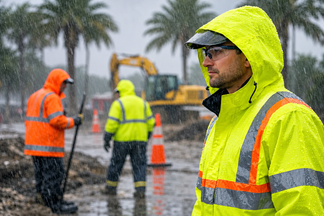
A Florida downpour can turn a clear work zone into a low-visibility hazard in minutes. For crews working along roads, on utility corridors, at ports, around warehouses, or on active construction sites, Florida hi vis rainwear must do more than keep clothing dry. It needs to help workers remain conspicuous against rain, spray, traffic, equipment, and a darkening sky without creating a heat burden that limits safe movement.
The right selection starts with the work environment, not the color of the garment. Safety managers and procurement teams should evaluate visibility requirements, rain exposure, work intensity, layering needs, and garment durability together. A rain jacket that works for a short inspection may not be the right choice for a utility crew working through an all-day storm.
What Florida Hi Vis Rainwear Must Handle
Florida weather creates a specific set of jobsite conditions. Heavy rain can arrive quickly, often with gusting wind, standing water, reduced daylight, and vehicle traffic moving through wet work areas. High humidity also means workers may overheat in rain gear that does not release heat or allow reasonable airflow.
This creates a real procurement trade-off. More waterproof protection generally means a more closed garment, while lighter and more breathable rainwear may provide less resistance to prolonged rainfall or abrasion. The best choice depends on how long workers are exposed, whether they are stationary or highly active, and what other PPE must be worn with the garment.
For roadwork, municipal crews, cable and fiber installation teams, and construction personnel, visibility is often the first concern. For marine, port, agricultural, and logistics operations, water resistance and freedom of movement may carry equal weight. In every case, rainwear should support the task rather than become an obstacle to it.
Start With ANSI/ISEA 107 Visibility Requirements
When high-visibility rainwear is expected to serve as compliant safety apparel, buyers should verify that the finished garment is labeled to the applicable ANSI/ISEA 107 standard. Do not assume a fluorescent yellow or orange jacket is ANSI-compliant simply because it looks like a high-visibility garment.
ANSI/ISEA 107 establishes performance requirements for high-visibility safety apparel, including background material, retroreflective material, design, and labeling. The appropriate garment type and performance class depend on the work environment and the exposure to moving vehicles or equipment. A worker directing traffic near higher-speed roadways faces a different visibility risk than an employee walking within a controlled warehouse yard.
Match the garment to the exposure
A high-visibility rain jacket may be suitable for workers who need upper-body coverage and flexibility. A rain bib and jacket combination provides more complete wet-weather protection for crews exposed to prolonged rain, kneeling, climbing, or splash. Full rain suits can make sense for emergency response, utility restoration, marine work, and other jobs where workers cannot simply wait out the weather.
If a worker is required to wear a high-visibility vest over rainwear, confirm that the combination does not cover reflective striping or interfere with the garment’s intended use. In many cases, ANSI-rated rainwear designed as the outermost layer is a cleaner and more practical approach. It reduces the chance that a separate vest becomes soaked, snagged, or removed when conditions deteriorate.
Waterproof Is Not the Only Performance Question
Rainwear descriptions can use several terms that sound similar but provide different levels of protection. Water-resistant garments can repel light rain or intermittent spray, but they are not necessarily built for hours of exposure. Waterproof rainwear is designed to prevent water penetration, though actual performance still depends on seams, closures, fabric condition, and how the garment is used.
For Florida work environments, sealed or taped seams deserve close attention. Water can enter through stitching even when the fabric itself resists rain. Storm flaps over zippers, adjustable cuffs, attached hoods, and protected pockets also matter during sustained exposure.
Breathability should be evaluated honestly. A highly active worker loading materials, repairing infrastructure, climbing a tower site, or installing underground cable can generate considerable body heat. A fully impermeable shell may keep rain out but trap perspiration inside. For short, severe rain events, this may be an acceptable trade-off. For extended physical work, consider lighter waterproof materials, venting features where appropriate, and work-rest practices that account for heat stress.
Design Details That Affect Job Performance
Rainwear often fails in the field because small design details were overlooked during purchasing. A hood that blocks side vision can create problems around traffic, forklifts, and mobile equipment. A hood that will not fit over required head protection may be ignored by the worker who needs it most. Look for hood designs that adjust securely and work with hard hats when the hazard assessment calls for head protection.
Pockets should be usable with gloved hands and positioned so they remain accessible when workers wear fall protection, tool belts, or harnesses. Front closures should be durable enough for repeated use, especially in operations where crews put on and remove gear several times per shift. Cuffs and ankle closures should limit water entry without catching on boots, ladders, or machinery.
For crews working near energized equipment, chemical processes, welding, or arc-flash hazards, standard rainwear may not be appropriate. High visibility and waterproofing do not replace flame-resistant, electrical, chemical, or task-specific protective requirements. The hazard assessment must determine whether a specialized outer layer is required and whether the selected garment is compatible with the rest of the PPE ensemble.
Build a Rainwear Program, Not a Last-Minute Purchase
The most effective rainwear programs standardize choices by job role and exposure level. This makes replenishment easier, improves training, and helps supervisors verify that crews have consistent protection across locations. It also avoids the common problem of buying a single low-cost rain jacket for every worker, regardless of job demands.
For example, a distribution center may need lightweight high-visibility jackets for yard personnel making short trips between docks and trailers. A public works department may need jacket-and-bib sets for drainage, road maintenance, and storm response crews. A utility contractor performing aerial or underground installation may need durable outerwear that accommodates hard hats, gloves, harnesses, and frequent movement.
Sizing is part of protection. Rainwear that is too small restricts reaching and bending, while oversized garments can snag, obscure reflective material, or create a trip hazard around stairs and equipment. Order ranges should account for the clothing layers workers may wear underneath, particularly for early-morning work, refrigerated loading areas, or crews moving between indoor cold storage and humid outdoor conditions.
Inspection, Care, and Replacement Matter
High-visibility rainwear should be inspected before use and after heavy-weather events. Look for torn fabric, failed seams, damaged closures, worn reflective tape, contaminated material, and fading fluorescent background fabric. A garment can still shed water while no longer providing the level of conspicuity expected for the work zone.
Follow manufacturer care instructions closely. Improper washing, harsh chemicals, excessive heat, and field repairs can reduce water resistance or damage retroreflective trim. Workers should not apply tape, paint, company decals, or dirt-covered tool pouches over reflective areas without confirming that visibility performance is not compromised.
Replacement schedules should be based on condition and use, not only on a calendar. A rain suit used occasionally for inspections may remain serviceable for a long period. Gear worn daily by road crews, port workers, or utility restoration teams will require more frequent review and replacement.
Buying Florida Hi Vis Rainwear for Crews
Before placing a bulk order, document where and when the rainwear will be used. Identify the visibility environment, duration of rain exposure, temperature and humidity conditions, mobility requirements, and compatibility with existing PPE. Then confirm the garment’s ANSI/ISEA labeling when high-visibility compliance is required, along with the waterproof construction and design features needed for the task.
ASA, LLC supports safety buyers with industrial PPE selected around real workplace hazards, compliance needs, and repeat-purchase requirements. For multi-location operations, standardizing approved rainwear options can reduce purchasing errors while giving supervisors confidence that crews have the right outer layer available when the forecast changes.
Rain is part of operating in Florida. Poor visibility, heat stress, and water-soaked clothing do not have to be. Select rainwear for the actual exposure, inspect it as seriously as other PPE, and keep replacement stock ready before the next storm moves through.