


Jul 12th 2026
What PPE Do Oil Terminal Workers Use on the Job?
A loading rack can shift from routine to high consequence in seconds. A hose connection can release vapor, a transfer area can become slippery, and ignition hazards may be present wherever flammable liquids are stored or moved. That is why the question, “what ppe do oil terminals workers use,” cannot be answered with one standard kit. Terminal PPE must match the task, product, exposure potential, and the employer’s documented hazard assessment.
For safety managers and buyers, the goal is not simply to issue more gear. It is to provide compatible, certified protection that workers can wear correctly through a full shift without creating new risks such as heat stress, reduced mobility, poor visibility, or static buildup.
What PPE Do Oil Terminal Workers Use?
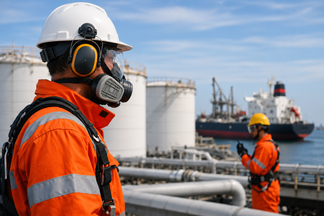
Most oil terminal workers use a combination of flame-resistant workwear, head and eye protection, task-specific gloves, protective footwear, hearing protection, and respiratory protection when airborne hazards require it. Depending on the work area, crews may also need fall protection, chemical protective clothing, personal flotation devices, high-visibility apparel, or cold-weather PPE.
The exact requirement depends on whether a worker is gauging tanks, connecting transfer hoses, sampling product, performing maintenance, working at height, operating equipment, or responding to a spill. OSHA requires employers to assess workplace hazards and select PPE that protects against those hazards. A terminal’s written PPE program should translate that assessment into clear, job-specific requirements.
Flame-Resistant Clothing for Flash-Fire Hazards
Flame-resistant, or FR, clothing is a core protection category at many petroleum terminals. Hydrocarbon vapors can ignite rapidly, and ordinary workwear may continue burning or melt onto the skin. Properly selected FR garments are designed to resist ignition and self-extinguish when the ignition source is removed.
For work where a flash-fire hazard has been identified, employers commonly specify FR shirts and pants, coveralls, or layered systems that meet applicable performance requirements such as NFPA 2112. Garments should also be evaluated for arc-rated protection when electrical arc-flash exposure is part of the job.
FR protection is not one-size-fits-all. A worker handling routine paperwork in an office area may not need the same apparel as a loading-rack operator. Conversely, wearing a non-FR hoodie, rain shell, or base layer beneath compliant outerwear can undermine the protection program. Procurement teams should standardize approved layers, outerwear, and cold-weather garments so crews are not forced to improvise during poor weather or night work.
Hard Hats, Eye Protection, and Face Protection
Tank farms, loading areas, maintenance shops, and marine transfer operations all expose workers to overhead hazards, moving equipment, pressurized connections, and splash risks. Hard hats that meet ANSI/ISEA Z89.1 are commonly required in active terminal areas. The correct class and type should be selected based on impact and electrical exposure risks.
Safety glasses meeting ANSI/ISEA Z87.1 are typically baseline protection. Side shields, wraparound lenses, or sealed chemical splash goggles may be necessary when workers handle additives, draw samples, open lines, or work around splash and vapor hazards. A face shield can add coverage during higher-splash tasks, but it does not replace primary eye protection.
Lens selection matters. Clear lenses are practical for indoor work and night shifts, while tinted or mirrored lenses can help in bright outdoor conditions. Safety managers should also account for prescription eyewear, anti-fog needs, and compatibility with respirator seals, hard hats, and hearing protection.
Gloves Selected for the Actual Task
Oil terminal gloves must be selected for the hazard, not just for durability. A glove that provides excellent grip may offer limited resistance to a specific chemical. A highly chemical-resistant glove may reduce dexterity enough to make small valve adjustments or sampling work less safe.
For general material handling, abrasion-resistant gloves with a secure grip may be appropriate. Maintenance work may require cut-resistant gloves rated under ANSI/ISEA 105. Product sampling, chemical handling, and spill response can call for chemical-resistant gloves made from materials selected against the specific substance and expected contact time.
Gloves should be inspected before use and replaced when torn, heavily contaminated, stiffened, or degraded. It is also wise to verify cuff length and interface protection. A short glove can leave a gap between the cuff and sleeve during a splash event. When chemical exposure is possible, the glove, sleeve, and any protective suit should function as a system.
Protective Footwear for Slips, Impacts, and Chemicals
Terminal surfaces are often exposed to water, oil residue, mud, loose gravel, or product drips. Slip-resistant work boots are essential, especially around loading racks, pump areas, docks, and stairways. Safety toe footwear meeting ASTM F2413 is commonly used to protect against dropped tools, hose fittings, and other impact or compression hazards.
Buyers should look beyond the toe cap. Outsole traction, puncture resistance, electrical hazard ratings, chemical resistance, ankle support, and ease of decontamination can all matter. In areas with flammable vapor concerns, footwear must align with the facility’s grounding, bonding, and static-control practices. The wrong boot material or contaminated sole can create operational problems even if the boot meets a basic safety-toe requirement.
Respiratory Protection Is a Program, Not Just a Mask
Respiratory protection may be needed when workers face vapors, gases, dust, or emergency-release conditions that cannot be controlled adequately through engineering controls and work practices. Oil terminals may involve exposure concerns related to volatile organic compounds, hydrogen sulfide, benzene, cleaning chemicals, and other site-specific contaminants.
A disposable filtering facepiece is not appropriate for every respiratory hazard and does not protect against oxygen-deficient atmospheres or unknown concentrations. Cartridge respirators, powered air-purifying respirators, and supplied-air or self-contained breathing apparatus each have different uses and limits. The correct choice depends on the contaminant, concentration, oxygen level, warning properties, work duration, and emergency conditions.
Under OSHA respiratory protection requirements, employers need a written program administered by a qualified person. Medical evaluations, fit testing for tight-fitting respirators, training, inspection, cleaning, storage, and cartridge change-out schedules are part of that program. Facial hair that interferes with the sealing surface can prevent a tight-fitting respirator from providing its intended protection.
Portable gas monitors are also common at terminals, but they are not PPE. They are hazard-detection equipment. A monitor can alert a worker to an unsafe atmosphere; it does not make that atmosphere safe to enter without the appropriate controls and respiratory protection.
Additional PPE for Terminal-Specific Work
Some terminal roles require protection beyond the daily baseline. Workers performing elevated maintenance, climbing fixed ladders, or accessing elevated platforms may need a full-body harness and a properly designed fall-arrest or restraint system. The harness alone is not a complete fall-protection solution. Anchorage, connectors, clearance, rescue planning, inspection, and training all matter.
Workers near docks, barges, or other open-water transfer points may require U.S. Coast Guard-approved personal flotation devices. High-visibility apparel can improve recognition around truck traffic, rail movements, forklifts, and heavy equipment. Where flash-fire exposure exists, high-visibility garments should be compatible with the facility’s FR requirements rather than introducing a non-FR outer layer.
Chemical-resistant coveralls, aprons, sleeves, boot covers, and splash suits may be needed during spill response, tank cleaning, chemical transfer, or decontamination. These garments should be selected from manufacturer permeation and degradation data for the chemicals involved. More coverage is not automatically better if the suit causes heat stress, restricts movement, or is incompatible with a respirator.
Cold weather creates another operational challenge. Outdoor terminal crews may need insulated FR outerwear, thermal glove liners, moisture-managing base layers, and footwear rated for cold, wet conditions. The key is avoiding non-compliant layers that compromise flash-fire protection or interfere with equipment use. A cold worker with numb hands is more likely to lose grip, miss a connection issue, or bypass a safety step.
Build PPE Around Work, Not Around a Catalog
A dependable oil terminal PPE program begins with a current hazard assessment and input from the people who perform the work. Review incident history, near misses, safety data sheets, task observations, weather exposure, equipment changes, and contractor activity. Then assign PPE by task and area, not by vague labels such as “terminal worker.”
Standardization helps crews and buyers manage stock, but it should not flatten meaningful differences between jobs. Keep approved options available in the correct sizes, including replacement eyewear, gloves, FR layers, and cold-weather gear. Train workers on limitations, care, inspection, and when PPE must be removed from service.
ASA, LLC supports industrial buyers with PPE categories built for regulated, high-risk work. The right equipment is the equipment that matches the hazard, fits the worker, meets the required standard, and is available before the next shift starts.