


Jul 22nd 2026
Warehouse Glove Rollout Case Study That Worked
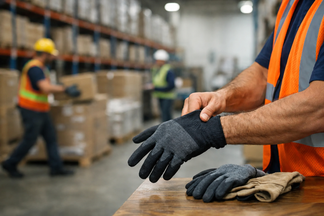
A glove program can fail long before a worker handles the first box cutter, broken pallet, or damaged carton. It fails when one glove is issued to every task, when crews reject the fit, or when depleted stock forces supervisors to hand out whatever is left. This warehouse glove rollout case study follows a representative multi-shift distribution operation that replaced an inconsistent glove assortment with a task-based, measurable program.
The operation is a composite example based on common warehouse PPE purchasing and safety challenges. The purpose is not to claim one glove works everywhere. It is to show how safety and operations teams can make a defensible glove decision, improve wear compliance, and establish a replenishment process that holds up during peak volume.
The Starting Problem: Too Many Gloves, Too Little Control
The warehouse employed roughly 180 associates across receiving, put-away, picking, packing, shipping, returns, and facility maintenance. Workers handled corrugated cartons, stretch wrap, pallet banding, plastic totes, metal racking, and occasional broken glass or damaged product. Some workstations also used utility knives and film cutters.
Its glove inventory had grown without a defined standard. Different shifts ordered different coated knit gloves, leather palms, disposable gloves, and general-purpose styles. Safety managers had difficulty confirming cut protection levels. Procurement had multiple similar SKUs, while supervisors regularly substituted gloves when a preferred size or style was unavailable.
The result was predictable. Some workers wore gloves that were too bulky for scanners and label application. Others removed them for picking because their grip was poor on smooth shrink wrap. A few high-risk tasks had no consistent cut-resistant glove requirement at all. The issue was not simply cost. It was a lack of alignment between task hazards, glove performance, and inventory control.
Why a Single Glove Standard Was Not the Answer
The initial request from operations was simple: find one durable glove that everyone would wear. The safety review showed why that approach would create new problems.
Receiving staff needed abrasion resistance and secure grip on cartons, especially where condensation or dust was present. Order pickers needed dexterity for handheld devices and small labels. Returns personnel encountered damaged packages, sharp staples, and unknown product conditions. Maintenance personnel had different exposure considerations, including sharp edges and equipment-related tasks that required task-specific procedures.
A general-purpose glove can be appropriate for general material handling. It should not automatically be assigned to knife use, sharp metal handling, chemical contact, energized work, or machinery tasks with entanglement hazards. The team decided to build a small, controlled glove matrix rather than force every employee into one product.
Warehouse Glove Rollout Case Study: The Assessment
The rollout began with a floor-level assessment, not a catalog review. The safety manager, warehouse manager, and lead supervisors walked each department during normal work. They observed how associates gripped cartons, opened cases, handled banding, used scanners, and moved pallets. They also reviewed first-aid logs, near-miss reports, damaged-product incidents, and current purchasing records.
The assessment separated jobs by actual exposure instead of department name. For example, a picker who only handled sealed cartons faced a different risk profile from a picker assigned to exception handling, where damaged cartons, exposed staples, and torn shrink wrap were more common.
The team identified three core glove categories:
- A lightweight coated knit glove for routine dry material handling, where grip and dexterity were the main requirements.
- A cut-resistant coated glove for carton opening, returns sorting, banding removal, and tasks with credible laceration exposure.
- A cold-condition glove for work in refrigerated staging areas, selected for thermal performance without making routine scanning and handling impractical.
- Disposable nitrile gloves for sanitation, limited-contact housekeeping, and designated work where contamination control or incidental exposure called for a disposable barrier.
The categories were intentionally limited. More options can improve task matching, but too many nearly identical choices make training, purchasing, and replenishment harder. The final selection also considered ANSI/ISEA 105 cut ratings, abrasion performance where applicable, coating type, cuff design, size availability, laundering guidance, and compatibility with the work being performed.
The Trial: Wear Data Matters More Than Opinions Alone
Before issuing gloves warehouse-wide, the operation ran a four-week controlled trial. Each department received sample quantities in multiple sizes, with a simple evaluation form completed at the end of each shift. Workers rated fit, grip, dexterity, heat buildup, durability, and whether they removed the glove during a task.
Supervisors tracked more operational measures: how often associates requested replacements, whether gloves snagged on packaging, whether scanner use slowed down, and whether the selected styles stayed available in the correct sizes. Safety staff recorded observations of glove use during carton opening and exception handling.
The trial produced an important adjustment. The original routine-handling glove performed well in receiving but was not preferred by high-volume pickers who used handheld scanners throughout the shift. The team moved to a thinner coated option for that group while retaining the more durable glove for receiving and pallet breakdown. This was a trade-off, not a compromise in protection. The tasks had different needs.
The cold-area trial required similar attention. A heavily insulated glove offered good warmth but reduced control for labeling and paperwork. Workers in refrigerated staging were issued a more dexterous thermal style for active handling, with heavier freezer gloves reserved for longer exposure and colder zones. For freezer operations, the team also confirmed that glove selection was part of a broader cold-stress plan that included appropriate outerwear, breaks, and dry replacement gear.
Training Was Built Around Decisions on the Floor
The new program was introduced through short department-level training, not a single broad presentation. Associates were shown which glove applied to each work area, how to identify the cut-protection category, when to replace damaged gloves, and when gloves were not the correct control.
The knife-use message was particularly direct: cut-resistant gloves reduce the severity of many laceration exposures, but they do not make unsafe cutting methods acceptable. Workers were instructed to use approved safety knives, cut away from the body, keep hands out of the blade path, and report damaged cutting tools. Gloves support safe work practices. They do not replace them.
Visual task cards were posted at glove issue points, and supervisors received a one-page issue guide. This reduced the common problem of a lead handing out a glove based only on what was in the cabinet. New-hire orientation included glove selection, while shift huddles covered recurring fit or wear concerns during the first month.
Replenishment Turned PPE Into a Managed Operating Item
A good glove selection will still fail if workers cannot obtain replacements. The warehouse replaced ad hoc cabinet stocking with defined par levels by department and size. Fast-moving sizes were monitored separately, preventing the familiar situation where only extra-small or extra-large gloves remained.
Procurement consolidated the approved gloves into a controlled list. Each item had a defined use case, approved sizes, and reorder point. Supervisors could request exceptions, but substitutions required review by safety and operations. This gave the organization flexibility for new tasks without allowing the program to drift back into uncontrolled purchasing.
The team also reviewed usage by department each month. A sudden increase in glove consumption could mean better compliance, but it could also indicate poor durability, incorrect sizing, improper use, or waste. Looking at consumption alongside injury reports and worker feedback made the data useful rather than merely administrative.
ASA, LLC supports this type of program with industrial glove categories built around job hazards, protection levels, and bulk replenishment needs. For buyers managing multiple facilities or cold-area operations, a defined approved-item list can simplify purchasing without reducing task-specific protection.
Results and Lessons for Warehouse Leaders
Within the first two months, supervisors reported fewer requests for random substitutions and better consistency during carton-opening and returns work. Worker feedback improved because gloves were selected for the work rather than imposed as a one-size solution. The organization also gained clearer documentation of why each glove category was issued, which strengthened its ability to support training and PPE assessments.
The largest improvement was operational: supervisors no longer had to make on-the-spot PPE decisions during a busy shift. The glove matrix, size plan, and replenishment process gave them a clear standard to follow.
Not every warehouse needs four glove categories. A low-hazard, dry goods operation may need only a general handling glove and a cut-resistant option for designated tasks. A facility handling oily parts, chemicals, frozen product, or sharp sheet material will require a more detailed review. The right program depends on the hazard assessment, the tools used, the environment, and the way workers actually perform the job.
Start by observing the task, then test gloves with the people who do it. When protection, usability, and supply control are evaluated together, glove compliance becomes far easier to sustain on a busy warehouse floor.