

Jul 6th 2026
Vinyl or Nitrile Aprons for Industrial Use
When an apron fails, it usually fails quietly first. A stiff panel starts cracking near the grommet. A splash sits on the surface longer than expected. A worker keeps adjusting the fit because the material does not move well over layered clothing. For buyers comparing vinyl or nitrile aprons, those small signs matter because they affect contamination control, chemical resistance, worker comfort, and replacement frequency.
In regulated and high-risk environments, apron selection is not a minor line item. It is part of a broader PPE decision tied to exposure type, cleaning protocol, shift length, and audit readiness. The right choice depends less on what is cheapest per unit and more on what holds up in the actual task.
Vinyl or nitrile aprons: what is the difference?
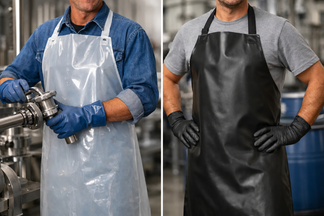
Vinyl aprons are typically made from PVC-based material. They are widely used because they are economical, water resistant, and suitable for many light-duty splash environments. In food processing, sanitation, janitorial work, and general industrial tasks, vinyl often covers the need when exposure is limited to moisture, mild chemicals, animal fats, grease, or routine washdown conditions.
Nitrile aprons are made from synthetic rubber material known for stronger chemical resistance and better flexibility under repeated use. They are often chosen for harsher industrial settings where workers may encounter oils, solvents, animal byproducts, caustics, or more aggressive cleaning agents. Nitrile usually costs more than vinyl, but it often delivers longer service life and better protection in demanding applications.
The practical difference is this: vinyl is often the value choice for lighter splash protection, while nitrile is the performance choice when the hazard profile is less forgiving.
When vinyl aprons make sense
Vinyl aprons fit well in operations where liquid exposure is frequent but the chemicals involved are limited in severity. Many food processing lines, dish areas, washdown stations, seafood handling operations, and light maintenance tasks use vinyl successfully because it is easy to clean, readily available, and cost-effective for large crews.
For procurement teams managing turnover, temporary labor, or multi-shift operations, vinyl can help control spend without leaving workers underprotected, provided the hazard assessment supports that decision. It is also a practical option when aprons are changed often for hygiene reasons rather than because of material breakdown.
That said, vinyl has limits. It can become stiff over time, especially in colder environments or when repeatedly exposed to certain cleaners. In freezer-adjacent operations, comfort and flexibility matter more than spec sheets alone suggest. If workers are bending, lifting, and moving through wet conditions for a full shift, a lower-cost apron that restricts motion can create its own productivity problem.
When nitrile aprons are the better fit
Nitrile aprons are often the safer call when the operation involves stronger chemicals, heavier oils, grease, bloodborne contaminants, or repeated contact with substances that can degrade lower-grade materials. They tend to stay more flexible, resist puncture and tearing better, and perform more reliably in applications where apron failure would expose garments or skin to a real hazard.
This is especially relevant in meat and poultry processing, pharmaceutical support areas, industrial sanitation, chemical handling, and maintenance work where crews are exposed to tougher compounds or more demanding wash cycles. In these settings, the higher purchase price of nitrile can be offset by fewer changeouts, fewer failures, and more consistent protection across the shift.
Nitrile can also be a strong choice when workers need better range of motion. Material flexibility matters during repetitive tasks. If the apron pulls awkwardly at the neck or catches during bending and reaching, compliance tends to drop. Workers either adjust the apron constantly or stop wearing it properly. Better wearability often leads to better PPE use.
Chemical resistance is where the decision gets serious
The biggest mistake buyers make is treating aprons as interchangeable splash barriers. They are not. If the job includes chemical exposure, the decision between vinyl or nitrile aprons should be tied to the exact substances in use, their concentration, contact duration, and whether exposure is incidental or routine.
Vinyl may perform adequately against some mild acids, bases, and cleaning compounds, but it is not the default choice for broad chemical resistance. Nitrile generally offers stronger resistance across a wider range of industrial substances, particularly where oils, fats, petroleum-based materials, or harsher cleaning agents are present.
Still, “nitrile is better” is too simple. The right approach is to match the apron material to the chemical data and task conditions. If workers are handling concentrated chemicals, dealing with heated solutions, or working in splash zones with prolonged contact, apron selection should be made with the same discipline used for gloves, sleeves, and face protection.
Food processing, sanitation, and regulated environments
In food and beverage operations, apron choice often sits at the intersection of hygiene, durability, and productivity. Vinyl is common because it is economical and suitable for many wet tasks. It works well for deboning support, prep lines, washdown, and general splash protection where chemical exposure is controlled.
Nitrile becomes more attractive when the operation is more aggressive - frequent sanitation cycles, heavy fat and oil contact, or tasks that cause aprons to flex and stretch repeatedly. In these environments, a stronger material can reduce waste and help crews stay protected without constant replacements.
For regulated buyers, the decision should also consider cleanability, resistance to cracking, and how well the apron holds up through repeated use. Once an apron surface begins degrading, it becomes harder to maintain and easier to overlook during fast-paced operations. That creates unnecessary risk in facilities where hygiene and audit performance matter every day.
Cold environments change the equation
Temperature affects apron performance more than many buyers expect. In chilled rooms, freezer transitions, and cold washdown areas, some materials lose flexibility and become uncomfortable or brittle faster. That matters for worker movement and service life.
If your team operates in refrigerated processing, cold storage support zones, or loading areas with frequent wet exposure, it is worth asking how the apron behaves in low temperatures, not just at room temperature. A material that looks acceptable in the catalog may feel completely different on the floor. This is one reason experienced industrial buyers often evaluate aprons by task environment, not just by thickness or price.
For operations that already invest heavily in freezer wear and task-specific PPE, the apron should be selected with the same mindset. It has to work with the rest of the system, not against it.
Cost per apron vs. cost per usable shift
On paper, vinyl often wins the unit-price comparison. In practice, the better value depends on how long the apron lasts in the actual application. If a lower-cost apron needs frequent replacement because of tearing, stiffness, cracking, or chemical degradation, the real cost rises quickly.
That is why experienced safety and procurement teams look at cost per usable shift, not cost per piece. They also consider how often workers reject a product because it is uncomfortable or poorly suited to the task. PPE only protects when it is worn correctly and consistently.
For larger facilities, pilot testing both materials in one department can settle the debate quickly. Track wear life, user acceptance, cleaning performance, and replacement frequency over a standard period. That gives you a decision based on operating reality instead of assumptions.
How to choose vinyl or nitrile aprons for your facility
Start with the hazard assessment. Identify the liquids, chemicals, soils, and cleaning agents involved. Then look at contact type - occasional splash, repeated exposure, or extended contact. After that, factor in temperature, worker movement, layering, and how often the apron must be cleaned or changed.
If the task is light-duty, wet, and cost-sensitive, vinyl may be the right answer. If the task is chemically demanding, high-use, colder, or harder on PPE, nitrile often justifies the added spend. The important point is that material choice should follow exposure and job conditions, not habit.
Buyers should also evaluate apron construction details such as thickness, tie style, coverage length, and tear points around hardware or attachment areas. Two aprons made from the same base material can perform very differently depending on how they are built.
ASA, LLC works with industrial and regulated buyers who need PPE decisions to hold up under real operating conditions, not just purchasing pressure. That matters when you are standardizing gear across departments, facilities, or multiple shifts.
A better apron choice rarely gets attention when everything goes right. But on a wet line, in a sanitation cycle, or during a chemical splash event, the difference between acceptable and appropriate becomes clear very quickly. Choose the material that matches the hazard, and the rest of the operation usually runs smoother.