


Jul 10th 2026
The Future of Connected Worker PPE
A worker climbs into a freezer room, a battery-powered tugger moves through the aisle, and a supervisor is watching throughput, temperature, and labor in real time. What still gets missed in many facilities is the worker’s PPE as a live source of risk data. The future of connected worker PPE is not about gadgets for their own sake. It is about making protective equipment more responsive, more traceable, and more useful in preventing injuries before they interrupt production.
For safety managers and procurement teams, that shift matters because PPE has traditionally been the last line of defense and one of the hardest categories to measure. You can verify compliance at the point of issue, but it is much harder to know whether equipment is being worn correctly, whether environmental exposure is trending toward unsafe levels, or whether replacement cycles are based on actual use rather than guesswork. Connected PPE starts to close that gap.
What connected worker PPE actually means
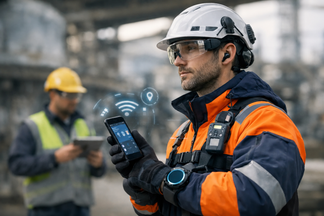
Connected worker PPE refers to protective equipment that can collect, transmit, or integrate data to support worker safety, compliance, and operational decisions. That can include smart hard hats with impact sensing, connected gas monitors, wearable location devices, biometric patches, communication-enabled hearing protection, and environmental sensors embedded into garments or attached to the worker.
In practical terms, the value is not in the device alone. It comes from the system around it. A connected gas detector is useful because alerts can reach the worker and the control room at the same time. A smart wearable in a cold environment becomes more valuable when temperature exposure data supports break scheduling, staffing, and freezer wear selection. The equipment becomes part of a broader safety process rather than a standalone product.
Why the future of connected worker PPE is getting real now
The market has talked about connected safety for years, but several conditions are making adoption more realistic. Facilities already use more sensors, more automated equipment, and more digital maintenance workflows than they did even five years ago. That makes it easier to plug worker safety data into existing systems.
At the same time, labor constraints are forcing employers to protect productivity as carefully as they protect workers. An injury, a heat stress event, a missed gas exposure alarm, or an avoidable cold-stress incident creates both human and operational cost. Buyers are under pressure to reduce those events without adding unnecessary complexity.
There is also a simple equipment reality. PPE categories that once had no digital component now have battery options, low-power wireless capability, and better durability. The hardware is improving, but so is the business case. Safety leaders are being asked to show where investment reduces claims, downtime, incident rates, and training gaps.
Where connected PPE makes the most sense first
Not every facility needs smart technology in every PPE category. In fact, over-deploying connected gear can create noise, higher costs, and low user acceptance. The best use cases usually start where risk is high, consequences are immediate, and data can support a clear intervention.
High-risk exposure environments
Confined space work, chemical handling, oil and gas, utility service, and emergency response are already strong fits. Connected gas detection and location awareness can shorten response time and improve accountability. In these settings, the return is often easier to justify because one missed alert can have severe consequences.
Cold storage and extreme temperature work
This is an area where connected PPE may become more practical than many buyers expect. In freezer operations, the challenge is not just whether a jacket or glove is rated for the environment. It is whether workers are rotating appropriately, whether exposure is accumulating across shifts, and whether certain tasks create cold stress faster than planned. Smart wearables paired with freezer-rated clothing could help supervisors spot patterns before they become incidents.
That does not mean every insulated bib overall needs embedded electronics. More likely, the future involves selective layers of monitoring, such as wearable exposure devices, badge-based systems, or environmental integration with workforce movement data. The PPE still has to perform first as PPE.
Lone worker and mobile crew operations
Construction, wireline service, municipal work, utility crews, warehouse yards, and transportation support teams can benefit from connected PPE when workers move between hazards or work with limited direct supervision. Fall alerts, location data, and emergency communications are especially relevant here. The priority is not surveillance. It is rapid awareness when a worker needs help.
The trade-offs buyers need to evaluate
The future of connected worker PPE is promising, but it is not automatic. Safety buyers should expect trade-offs in four areas.
First is durability. Industrial PPE gets dropped, exposed, washed, frozen, saturated, and worn for long shifts. If the connected component cannot withstand the environment, the safety value drops quickly. This is especially important in food processing, freezer operations, construction, and chemical environments.
Second is power management. A connected device that is dead halfway through the shift is worse than a standard device that performs reliably. Charging protocols, battery replacement, and spare unit planning have to be built into daily operations.
Third is data quality. More data does not always mean better decisions. If the platform throws constant alerts, supervisors may start ignoring them. If the metrics do not tie to a specific risk control action, the technology becomes expensive background noise.
Fourth is worker acceptance. Crews are more likely to wear connected gear consistently when it is comfortable, clearly useful, and explained as a safety measure rather than a disciplinary tool. Rollout matters as much as product selection.
How procurement and safety teams should prepare
Start with the hazard, not the technology
The right question is not, What smart PPE should we buy? It is, Where do we have exposure, compliance, or emergency response gaps that current PPE programs do not address well? That framing keeps purchasing decisions tied to actual risk and helps avoid unnecessary pilots.
For example, a distribution center may get more value from connected high-visibility wear or proximity alerts around powered equipment than from biometric devices. A pharmaceutical or chemical operation may prioritize connected respirator data or area exposure monitoring. A cold-storage facility may focus on temperature exposure tracking and better worker communication inside low-visibility, low-temperature zones.
Verify standards and base performance first
Connected features should never distract from the PPE’s core protective function. Buyers still need to confirm ANSI, ISEA, OSHA-related, or task-specific compliance requirements depending on the category. If a hard hat, glove, garment, or respirator does not meet the required standard for the hazard, the smart feature does not make it acceptable.
This is where experienced industrial suppliers add real value. The technology layer has to be matched with certified protective equipment that is appropriate for the work environment, not just attractive in a demo.
Pilot in a controlled use case
A small pilot often works better than a sitewide rollout. Choose one facility, one exposure type, and one measurable objective. That objective might be faster incident response, better documentation of PPE use, reduced heat or cold stress events, or stronger visibility into lone worker status.
Keep the pilot long enough to capture real operational behavior, including charging, maintenance, seasonal changes, and user feedback. A two-week pilot may show novelty. A longer one shows whether the process will hold up.
What the future of connected worker PPE will likely look like
The next phase is unlikely to be a dramatic replacement of all traditional gear. It will be a layered model. Standard PPE will remain the foundation, especially in large-volume categories where durability, certification, and comfort drive daily use. Connected features will be added where the risk profile justifies the cost and the data supports a direct action.
Over time, buyers can expect better interoperability between PPE data, training records, maintenance systems, and incident reporting. That matters because safety performance is rarely caused by one factor. A near miss may involve worker location, machine status, environmental conditions, fatigue, and whether PPE was worn correctly. Connected systems can help assemble that picture faster.
There will also be a stronger separation between meaningful connected PPE and products that are simply marketed as smart. Serious buyers should be skeptical of any solution that cannot explain its protective purpose, battery life, environmental limits, data ownership, and integration requirements.
For organizations managing multiple facilities, the long-term value may be consistency. Connected PPE can help standardize how exposure is measured, how incidents are escalated, and how replacement decisions are made across sites. That kind of standardization supports both compliance and procurement efficiency.
ASA, LLC has seen the same pattern across industrial safety categories since 2003. The products that last are the ones that solve a real hazard problem, hold up in actual working conditions, and fit into the way crews already operate.
The most useful view of connected worker PPE is not that every glove, vest, or jacket will become a device. It is that protective equipment is moving closer to the rest of the safety system. For buyers responsible for uptime, audit readiness, and workforce protection, that shift is worth watching carefully because the best decisions will come from balancing innovation with proven jobsite performance.