

Jun 9th 2026
How to Buy Fall Harnesses for Your Crew
A fall harness that looks fine on a product page can still be the wrong choice for your crew. That is usually where buyers run into trouble. If you are responsible for how to buy fall harnesses for construction, maintenance, warehousing, utilities, or industrial access work, the real job is not just ordering harnesses. It is matching equipment to hazard, work method, user fit, compliance requirements, and replacement cycles.
A poor match creates more than discomfort. It leads to misuse, lower wear rates, rejected gear in the field, and increased exposure during work at height. For safety managers and procurement teams, buying the right harness means balancing protection, user acceptance, and operational consistency.
How to buy fall harnesses starts with the work
Before comparing models, start with the task. A harness for roofing work is not always the best option for a maintenance technician climbing fixed ladders, and neither may fit a worker who needs positioning while handling steel, cable, or telecom installation. The first decision is not brand or price. It is what the worker is actually doing while tied off.
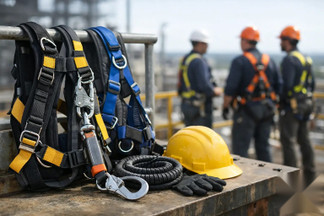
If the job only requires basic fall arrest, a standard full-body harness with a dorsal D-ring may be enough. If workers need to maintain position with both hands free, side D-rings for positioning become relevant. If ladder climbing is part of the routine, a front or sternal connection point may be needed depending on the system in use. In confined space entry or retrieval scenarios, shoulder D-rings may matter as much as the dorsal point.
This is where buyers can overspend or underspec. A feature-heavy harness may seem like a safer purchase, but extra hardware adds weight, cost, and complexity. On the other hand, a stripped-down harness used in the wrong application can force unsafe workarounds.
Know the compliance baseline
In the U.S., fall protection purchases should align with OSHA requirements and applicable ANSI standards. For many buyers, that means confirming the harness is part of a compliant personal fall arrest system and verifying the product labeling, capacity range, and intended use.
A full-body harness should never be treated as a standalone solution. It works as one component in a complete system that also includes a compatible lanyard or self-retracting device, anchorage, and connector hardware. Buying harnesses without checking system compatibility is a common procurement mistake, especially when replacing only one piece of existing gear.
You also want to review user weight capacity, including tools and carried equipment. A harness rated for one weight range may not be suitable once heavy winter gear, tool belts, battery packs, or specialized equipment are added. That matters in construction, utility work, freezer operations with bulky insulated clothing, and any environment where workers wear layered PPE.
Certification details matter more than marketing claims
Product descriptions often emphasize comfort and performance, but buyers should focus first on standards, labeling, instructions, and traceability. Clear manufacturer documentation helps support inspections, training, and audits. It also makes replacement planning easier when you are managing multiple crews or sites.
For regulated workplaces, especially larger industrial and institutional operations, documentation is part of the value. A slightly lower upfront price is not much of a savings if the product creates confusion during onboarding, inspection, or incident review.
Fit is not a side issue
One of the fastest ways to waste a fall protection budget is to buy one harness model for everyone and assume adjustability solves the problem. It rarely does. A harness that fits poorly can shift under load, create pressure points, reduce mobility, and discourage proper use.
When thinking about how to buy fall harnesses, sizing needs to be treated as a procurement requirement, not a field-level afterthought. Crews often include workers with very different builds, and some jobs require use over arc-rated clothing, rain gear, or cold-weather layers. If the harness does not adjust properly over the clothing actually worn on the job, it is not the right harness.
Comfort features also deserve a practical review. Padding on shoulders, waist areas, and leg straps can improve wear time, especially for workers in harnesses for extended periods. Quick-connect buckles can reduce donning time and improve consistency, but some teams still prefer tongue buckles for familiarity and inspection confidence. There is no universal answer. It depends on the workforce, the job cadence, and how often the harness is put on and removed.
Men’s, women’s, and universal fit considerations
Some crews perform better with access to harnesses designed around a wider range of body shapes. A universal model may work in many environments, but not all. If workers consistently complain about strap placement, bunching, or limited movement, the issue may be fit design rather than resistance to PPE.
That matters because discomfort turns into noncompliance quickly. Workers who feel restricted are more likely to loosen straps incorrectly, skip adjustments, or avoid tying off when the task seems short.
Match hardware and materials to the environment
The work environment changes what a good harness looks like. For indoor general maintenance, standard webbing and hardware may be sufficient. In welding, foundry, or hot work environments, heat and spark resistance become part of the buying decision. In chemical handling or corrosive settings, hardware finishes and webbing durability can affect service life.
For outdoor crews, weather exposure matters. UV, moisture, mud, oils, and abrasive surfaces all shorten usable life if the harness materials are not suited to the environment. If your workforce moves between indoor and outdoor tasks, or between clean production areas and harsh field conditions, standardizing on one harness may not be realistic.
Cold conditions deserve special attention. In freezer operations or winter field work, bulky insulated clothing changes fit, range of motion, and buckle handling. Hardware that is hard to operate with gloves slows work and encourages shortcuts. If crews work in sub-zero environments or loading areas where temperatures swing sharply, test the harness over actual cold-weather PPE before placing a larger order.
Buying for one worker is different from buying for a program
An individual purchase can focus on preference. A facility-wide or multi-site purchase has to support consistency. That changes the decision process.
For larger teams, think about inspection routines, training time, replacement scheduling, and inventory control. Too many harness variations can complicate onboarding and make it harder for supervisors to verify proper use. Too few variations can create fit and application problems. The right middle ground is usually a narrowed set of approved harnesses assigned by task type.
This is also where procurement efficiency matters. Buyers managing recurring orders often benefit from standardizing by role, such as one harness for general construction, one for ladder and climbing applications, and one for positioning or specialized maintenance. That structure is easier to support across purchasing, training, and field inspections.
Ask these questions before you place the order
A good buying process usually comes down to a few practical questions. What type of work is being performed? Which connection points are required? What clothing is worn with the harness? How long is the harness worn each shift? What environmental conditions affect wear? How will inspection, storage, and replacement be managed?
If any of those answers are unclear, the safest decision is to slow down and resolve them before ordering at scale.
Price matters, but cost of use matters more
Low-cost harnesses can make sense for short-duration, low-frequency work or for tightly defined applications. They are not always the best value for crews who wear harnesses every day. In those settings, comfort, durability, and simpler adjustment often justify a higher initial cost.
The true cost includes product life, worker acceptance, training burden, and the chance of early replacement due to damage or misuse. A harness that holds up better, gets worn correctly, and fits the task often lowers your overall program cost even if the unit price is higher.
This is especially true for buyers managing multiple departments or sites. Reordering the wrong product because it was cheap the first time creates unnecessary friction. Trusted suppliers with category knowledge can help reduce that risk by aligning product selection with actual hazard exposure and work conditions.
ASA, LLC has supported industrial PPE buyers since 2003, and that kind of experience matters most when the choice affects both compliance and day-to-day work performance.
How to buy fall harnesses without creating problems later
The best harness purchase is the one that still makes sense six months from now, after inspections, weather exposure, worker feedback, and repeat ordering. That means looking beyond the spec sheet. Consider how the harness will be issued, adjusted, inspected, cleaned, stored, and replaced.
If possible, trial a small quantity with actual users before standardizing. That is often the fastest way to catch fit issues, hardware preferences, and application mismatches that are easy to miss in a catalog review. Buyers who do this usually make better long-term decisions than those who purchase only by price or broad product claims.
When you buy fall harnesses with the job, the worker, and the full protection system in mind, you are not just filling a PPE requirement. You are building a fall protection program people can actually use correctly when the work gets demanding.
The right harness should make safe work more likely, not more complicated.