

Jun 5th 2026
Half mask vs full face respirator: the main difference
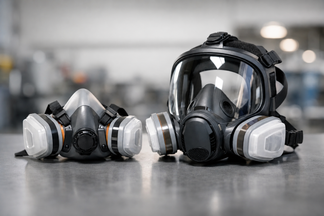
A half mask respirator covers the nose and mouth. A full face respirator covers the nose, mouth, and eyes. That basic design difference changes the level of protection as well as the rest of the PPE system around it.
In general, a half mask is often chosen for particulate work, nuisance levels of certain contaminants, and many tasks where separate safety eyewear is already required. It is lighter, typically less expensive, and often easier for workers to tolerate over longer shifts.
A full face respirator adds a face shield-style lens that protects the eyes from certain airborne hazards while increasing the assigned protection factor compared with a comparable half mask setup. That added coverage can be critical in environments where vapor, splash risk, or fine particulates may irritate or injure the eyes as well as the respiratory system.
The practical takeaway is simple. If the hazard only threatens the breathing zone and other eye protection is already working well, a half mask may be sufficient. If the hazard affects the eyes too, or if higher respiratory protection is required, a full face respirator becomes much more compelling.
Compare respiratory protection equipment, including disposable respirators, half-mask and full-face respirators, PAPRs, cartridges, filters, and fit-testing accessories.
When a half mask respirator makes more sense
Half mask respirators are common in manufacturing, construction, maintenance, warehousing support tasks, and industrial operations where teams need reusable respiratory protection without the weight and visual bulk of a full face unit. They work well when paired with the correct filters or cartridges and when the rest of the PPE ensemble is already established.
In many facilities, the biggest advantage is wearability. Workers are more likely to stay compliant with a respirator that feels lighter, stores easily, and does not noticeably narrow the field of vision. That matters during repetitive work like sanding, grinding, material handling in dusty areas, or routine chemical transfer tasks with lower exposure levels.
Cost control is another reason buyers often start with half mask systems. Facepieces are generally less expensive, replacement parts are straightforward, and training may be easier when the gear is familiar to workers. For large teams or multi-site programs, those differences add up.
Still, there are trade-offs. A half mask does not protect the eyes. If the task creates a respiratory hazard and an eye hazard at the same time, workers may need tightly fitting goggles or other compatible eyewear. That extra layer can create fogging, discomfort, or fit conflicts, especially in hot environments or high-movement applications.
When a full face respirator is the better call
A full face respirator is usually the stronger option when the job exposes workers to contaminants that can enter or irritate the eyes, when higher protection factors are needed, or when combining separate eye protection with a half mask creates compatibility problems.
This often applies in chemical handling, pharmaceutical environments, some painting and coating operations, remediation work, and maintenance tasks involving stronger vapors or fine airborne contaminants. The facepiece lens provides integrated eye protection, which can simplify the PPE setup and reduce gaps between items.
The higher level of respiratory protection is a major reason safety teams select full face units for more serious exposure conditions. If monitoring data, SDS guidance, or the hazard assessment shows a tighter margin for error, full face protection may be the more defensible choice.
But full face systems ask more from the user. They are heavier, bulkier, and usually more expensive to purchase and maintain. Workers may find them hotter over long shifts, and communication can become more difficult. In fast-paced operations, those issues can affect adoption unless training, fit testing, and task matching are handled carefully.
Protection level is only part of the decision
Too many respirator decisions get reduced to a simple chart. In real operations, the right answer depends on how the respirator performs in the full work environment.
Consider visibility first. Full face respirators can improve eye protection but may introduce glare, scratching, or lens fogging if maintenance slips. In sheet metal, glass handling, robotics-integrated production, or any task requiring strong peripheral awareness, that matters. A worker who cannot see clearly around moving equipment is dealing with a different safety risk.
Communication is another factor. In noisy facilities, workers already compete with machinery, forklifts, alarms, and ventilation systems. A full face respirator can make verbal communication harder, which may slow coordination during line changes, confined work, or emergency response tasks. A half mask usually interferes less, though it still changes speech clarity.
Then there is heat and fatigue. Heavier facepieces tend to be more noticeable over long wear periods. If a worker is pulling a respirator off between tasks because it feels too burdensome, the theoretical protection level does not help much. Comfort does not override hazard assessment, but it should be part of implementation planning.
Fit, compatibility, and facial hair issues
Whether you choose a half mask or full face respirator, fit is not optional. Respirators only perform as intended when the seal is correct, the worker is medically cleared as required, and fit testing is completed under the employer's respiratory protection program.
Half masks can be simpler for some users to position and check, but they are still vulnerable to seal failure from facial hair, poor strap adjustment, or the wrong size. Full face respirators add more sealing surface, which can improve protection when fitted correctly but also makes proper sizing and fit testing especially important.
Compatibility with other PPE deserves close attention. Hard hats, face shields, hearing protection, and safety eyewear can all interfere with respirator performance if the system is assembled without planning. This is a frequent issue in industrial settings where workers are not wearing only one protective item. The respirator has to work with the rest of the kit, not in isolation.
Buying considerations for safety managers and procurement teams
From a purchasing standpoint, the half mask vs full face respirator choice should be tied to standardization, replacement cycles, and the actual hazard categories across departments. A plant may not need one universal answer. It may need a half mask program for general maintenance and a full face option for chemical washdown, spill response, or higher-risk process work.
Look closely at cartridge and filter commonality, lens replacement availability, cleaning requirements, and storage demands. Full face respirators can carry higher upfront costs, but they may reduce the need for separate eye protection in some applications. Half masks may lower unit cost while increasing the need to manage compatible goggles or sealed eyewear.
Training time matters too. If crews rotate often, use temporary labor, or work across varied tasks, simpler systems may support more consistent compliance. On the other hand, facilities with known high-risk exposures should not let convenience drive selection where a higher level of protection is warranted.
For buyers managing multiple sites, consistency in sizing, replacement components, and program administration can be just as important as product price. That is one reason experienced industrial suppliers such as ASA, LLC focus on matching PPE categories to actual work conditions rather than treating respirators like interchangeable commodities.
So which one should you choose?
If the hazard is limited to inhalation exposure and workers can safely use separate eye protection without interference, a half mask respirator is often the more efficient and comfortable option. If the eyes also need protection, if the exposure level calls for a higher protection factor, or if combining multiple PPE items creates fit problems, a full face respirator is usually the better choice.
The right answer comes from the hazard assessment first, then from the realities of the job. Protection level, eye exposure, comfort, communication, visibility, maintenance, and program consistency all matter. A respirator program works best when the equipment is not only compliant, but practical enough for crews to use correctly every time.
The best respirator is the one that matches the hazard and the way the work actually gets done.