

Posted by ASA, LLC on Aug 31st 2026
Food-Contact Gloves: A Buyer’s Guide for Processing and Sanitation
Food-contact gloves should be selected for the exact task, not by material name alone. A glove used for ready-to-eat food handling may need a different specification from one used for raw-product processing, sanitation chemicals, cold rooms, cutting work, or maintenance. Buyers should verify food-contact documentation, physical protection, chemical compatibility, fit, change frequency, and facility rules before approving a glove.
Start with the food zone and the worker’s task
Separate the jobs before comparing products. Direct food handling, packaging, equipment cleaning, sanitation, maintenance, and freezer work create different requirements. Record whether the glove will contact ready-to-eat food, raw animal product, packaging only, or no food at all. Then document moisture, temperature, grip, dexterity, puncture, cut, and chemical hazards.
The FDA Food Code is a model used by jurisdictions for retail and food-service rules; it is not a blanket specification for every food-manufacturing operation. The applicable state, local, customer, and facility requirements still need to be confirmed. For worker protection, OSHA 29 CFR 1910.138 requires hand protection to be selected around the task, conditions, duration of use, and identified hazards.
Verify the documentation behind “food safe”
Do not rely on a product title, color, or general “food grade” claim. Ask for current manufacturer documentation that identifies the glove, material, intended use, and any applicable food-contact limitations. Match the document to the exact product or manufacturer part number being purchased.
A useful approval record includes the manufacturer, part number, glove material, thickness, powder status, color, size range, packaging, intended food-contact use, and the document used to support that use. If the operation exports products or follows a customer standard, record any additional regional or customer requirements separately.
Choose material after defining the work
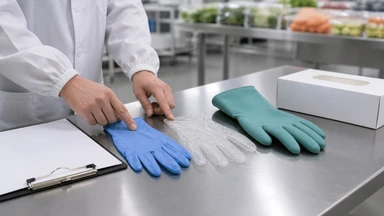
Nitrile gloves
Disposable nitrile gloves are often selected when buyers need puncture resistance, tactile control, and frequent glove changes. They can fit many food-processing, inspection, packaging, and light sanitation workflows, but nitrile is not resistant to every chemical. Confirm the exact formulation and manufacturer data for the task.
Vinyl gloves
Vinyl gloves can be a practical option for short, light-duty food handling and frequent changes when the approved product documentation fits the application. They generally should not be treated as a universal substitute for nitrile in demanding puncture, chemical, or extended-wear tasks. Buyers can compare ASA’s powder-free vinyl food-handling gloves when a latex-free, high-change-volume option is needed.
Latex gloves
Latex can provide good fit and dexterity, but facilities should evaluate allergy and cross-contact concerns and confirm that the chosen product and local rules fit the intended use. Material preference should never replace product-specific documentation.
Food contact does not cover every hand hazard
A glove suitable for food contact is not automatically chemical resistant, cut resistant, puncture resistant, or insulated. Sanitation teams should match gloves to the cleaner or sanitizer, concentration, temperature, contact type, and exposure time using the chemical Safety Data Sheet and the glove manufacturer’s resistance data. Review ASA’s chemical-resistant glove options for tasks that need more than a thin disposable barrier.
Cutting, deboning, metal handling, and maintenance may require rated cut protection. Cold rooms and freezers may require insulation without sacrificing grip or dexterity. Where a protective glove is worn under or over a food-contact layer, the facility should define how the layers are changed, cleaned, stored, and inspected.
Build change-out rules into the purchase specification
Gloves work only when the program explains when to change them. The FDA Food Code states that single-use gloves, when used, are for one task and should be discarded when damaged, soiled, or when an interruption occurs. Facilities should translate that principle into clear procedures for their own work zones.
- Wash and dry hands before donning gloves.
- Change gloves between incompatible tasks and food zones.
- Replace torn, punctured, contaminated, or visibly soiled gloves.
- Do not wash or reuse gloves labeled for single use.
- Keep glove dispensers protected from splash, dust, and contamination.
- Train workers on removal methods that reduce contact with the glove exterior.
Food-contact glove purchasing checklist
- Food zone and exact task
- Direct, incidental, or no food contact
- Ready-to-eat versus raw-product handling
- Disposable or reusable program
- Nitrile, vinyl, latex, or another verified material
- Thickness, texture, cuff length, color, and powder status
- Sizes needed across the workforce
- Wet grip and dexterity requirements
- Chemical, cut, puncture, heat, or cold hazards
- Required manufacturer food-contact documentation
- Box count, case quantity, monthly usage, and reorder point
- Change-out, storage, and disposal procedures
Use ASA’s disposable glove category to compare nitrile, vinyl, latex, and other single-use options by material, packaging, and application.
If the specification names DuraSkin or another exact glove line
Send the manufacturer part number whenever possible. Brand-only requests can point to several materials, thicknesses, colors, and pack configurations. Include the required material, size range, box and case count, food-contact documentation, and any chemical or cut requirements so ASA, LLC can compare the requested item with stocked or sourceable options without making an unsafe substitution.
Bulk and recurring glove programs
For a facility or multi-location order, calculate consumption by job and shift rather than using one average for the whole site. That makes it easier to set reorder points, standardize approved SKUs, and avoid mixing a light food-handling glove with a sanitation or maintenance glove.
ASA, LLC supports food processors, cold-storage operations, commercial kitchens, institutions, government buyers, and multi-site purchasing teams with volume pricing, purchase orders, product sourcing, and formal quotes. Review the broader food-processing PPE selection or request a quote with the task, hazards, sizes, quantities, and documentation requirements.
Safety note
This guide is general purchasing information, not legal advice or a substitute for a workplace hazard assessment, food-safety plan, manufacturer instructions, or applicable government requirements. Confirm product-specific food-contact documentation and all task hazards before approving a glove.
Frequently asked questions
Does “food safe” mean a glove is suitable for every food-processing job?
No. Food-contact suitability does not establish chemical, cut, puncture, heat, or cold protection. Match the glove to the exact task and verify current product documentation.
Are nitrile gloves always better than vinyl gloves for food handling?
No. Nitrile often offers stronger puncture resistance and durability, while vinyl may fit short, light-duty, high-change workflows. The correct choice depends on the task, hazards, change frequency, documentation, and cost per use.
Can a single-use glove be washed and reused?
No. A glove labeled for single use should be discarded according to the facility’s change-out procedure and the manufacturer’s instructions.