

Posted by American Safety Associates, LLC on Aug 4th 2026
Cold Chain Transportation Safety Checklist for Food Loads
Cold chain transportation safety requires more than keeping a refrigerated truck cold. A defensible program connects the shipper's temperature and sanitation specifications with a prepared vehicle, controlled loading and unloading, protected freight, trained personnel, suitable worker PPE, and records that show what happened during the shipment.
For food distributors, cold-storage facilities, processors, carriers, and procurement teams, the best starting point is a route-specific checklist. The checklist should identify who owns each control and what evidence must be reviewed before the load moves.
What Cold Chain Transportation Must Control
The FDA Sanitary Transportation Rule establishes requirements for covered shippers, loaders, motor and rail carriers, and receivers. Depending on the operation and assigned responsibilities, the program may need to address vehicle suitability, cleanability, temperature control, contamination and allergen cross-contact, training, written procedures, and records.
The rule does not prescribe one temperature for every food. The shipper's specifications and the food's safety requirements determine the operating conditions. Avoid using broad temperature claims unless those values are supported for the specific product and shipment.
Worker protection is a separate but connected responsibility. OSHA 29 CFR 1910.132 requires employers to assess workplace hazards and select properly fitting PPE that protects employees from the hazards identified. In refrigerated transportation, those hazards may include cold stress, wet or icy walking surfaces, pallet and vehicle traffic, manual handling, reduced dexterity, and sanitation chemicals.
Seven Checks Before Outfitting a Refrigerated Transport Operation
1. Define the Product and Route Specifications
Record the product, required operating temperature, packaging, route length, expected door openings, loading and unloading time, transfer points, and contingency limits. Identify whether the load contains ready-to-eat food, raw food, allergens, or non-food items that require segregation or other protective measures.
Assign responsibility among the shipper, loader, carrier, and receiver in written procedures or agreements where required. The person reviewing an alarm or temperature record must also have the authority and instructions to act.
2. Verify the Vehicle and Refrigeration Setup
Confirm that the trailer, van body, insulated container, refrigeration unit, doors, seals, drains, and interior surfaces are suitable for the intended load and can be adequately cleaned. Before loading food that requires temperature control for safety, verify that the refrigerated compartment is prepared and pre-cooled when required by the shipper's specifications.
Monitoring equipment should be appropriate for the shipment and checked according to the facility's program. Define alert thresholds, response steps, escalation contacts, and disposition authority before departure.
3. Control Staging and Transfer Exposure
Loading docks, trailer thresholds, temporary staging areas, and delivery stops are common weak points because product leaves the most stable environment. Set maximum staging times based on the product and operating plan, reduce unnecessary door-open time, and keep receiving space ready before moving the load.
For palletized temperature-sensitive freight, insulated pallet covers and thermal blankets can help reduce exposure during transfers and short staging periods. They do not actively refrigerate a load, correct an out-of-temperature product, or replace a qualified vehicle. Select the cover by pallet dimensions, exposure conditions, cleaning requirements, closure design, and manufacturer performance information.
4. Protect and Secure the Load
Use appropriate load bars, straps, dividers, blocking, or other restraint methods for the trailer and freight configuration. Thermal protection and cargo securement perform different jobs; one cannot substitute for the other.
Inspect cartons, wrap, pallets, labels, and reusable covers before movement. A torn cover, broken pallet, wet carton, or blocked label can create handling, sanitation, and receiving problems even when refrigeration is operating correctly.
5. Match Worker PPE to Each Transport Task
Do not issue one generic cold-chain PPE kit to every role. Evaluate drivers, loaders, dock personnel, liftgate operators, order selectors, sanitation workers, and maintenance technicians separately.
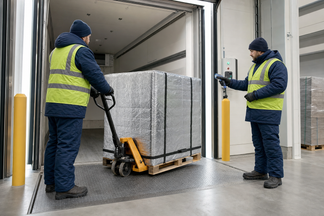
Workers exposed to refrigerated or freezer conditions may need insulated freezer workwear, cold-weather head and neck protection, insulated work gloves, and insulated or waterproof footwear. Select insulation for the actual temperature, exposure duration, activity level, moisture, and air movement.
PPE must also support the task. Gloves should preserve grip and dexterity for scanners, door hardware, straps, pallet jacks, and liftgate controls. Footwear should be evaluated on the facility's surfaces while housekeeping, drainage, lighting, and ice controls remain in place.
For a broader facility-level selection framework, review ASA's cold-storage PPE requirements guide.
6. Build Sanitation and Cross-Contact Controls Into the Kit
Create written cleaning and inspection procedures for vehicle interiors, reusable pallet covers, blankets, carts, restraints, door handles, and other transport equipment. Procedures should identify approved cleaning agents, required contact time where applicable, drying, inspection, storage, and removal-from-service criteria.
Segregate or clean equipment as required when moving raw food, ready-to-eat food, allergens, and non-food freight. Remove reusable protection from service when it is torn, heavily soiled, retains moisture, cannot be adequately cleaned, or no longer performs as intended.
7. Standardize Inspections, Records, and Replenishment
Use pre-trip and post-trip checks to verify refrigeration readiness, door and seal condition, cleanliness, monitoring equipment, load-protection supplies, restraints, PPE, and emergency items. Record exceptions and corrective actions rather than relying on a checked box alone.
Set minimum stock levels for fast-moving PPE and reusable thermal protection. Keep replacement gloves and other wet-gear options available, and define who replenishes each vehicle or dock station.
Copy-Ready Cold Chain Transportation Checklist
- Product and operating-temperature specifications are documented
- Shipper, loader, carrier, and receiver responsibilities are assigned
- Vehicle and equipment are suitable, cleanable, and prepared
- Refrigerated compartments are pre-cooled when required
- Monitoring, alarms, response steps, and records are defined
- Staging time and door-open exposure are controlled
- Pallet covers or blankets fit the load and intended transfer
- Freight is secured independently of its thermal protection
- Worker PPE matches each role, temperature, and task
- Cleaning, segregation, inspection, and replacement procedures are documented
- Required PPE and transport supplies are stocked before departure
Procurement and Quote Support
American Safety Associates, LLC helps food distributors, refrigerated warehouses, logistics operations, and institutional buyers source cold-storage PPE and reusable load-protection products for defined operating conditions.
When requesting a quote, include the route type, product temperature, pallet dimensions, expected staging time, work zones, employee roles, PPE sizes, cleaning requirements, quantity, and replacement schedule. Request a formal cold-chain PPE and pallet-protection quote from ASA, LLC.
Safety and Compliance Note
This checklist is general purchasing guidance, not legal advice or a complete food-safety plan. Confirm which FDA Sanitary Transportation Rule requirements apply to your operation, follow shipper specifications and written agreements, complete the employer's OSHA-required hazard assessment, and verify all product claims with current manufacturer documentation. Insulated covers do not actively refrigerate freight, and PPE does not replace engineering controls, sanitation, traffic controls, or safe work procedures.
Frequently Asked Questions
Does FDA require one temperature for all refrigerated food transportation?
No. The FDA rule requires adequate temperature control for food that requires it for safety, but the appropriate operating conditions depend on the food and the shipper's specifications.
Are insulated pallet covers a replacement for a refrigerated truck?
No. Covers can help reduce temperature exposure during transfers or staging, but they do not actively cool freight or replace a properly prepared refrigerated vehicle.
What PPE do refrigerated truck drivers need?
The answer depends on the driver's tasks and exposure. Review cold duration, moisture, walking surfaces, material handling, liftgate use, vehicle traffic, sanitation chemicals, and any identified foot, hand, visibility, or head hazards.
Who is responsible for sanitary transportation records?
Responsibilities vary by role and written agreement. Covered shippers, loaders, carriers, and receivers should determine which FDA requirements apply and document the procedures, communications, training, and records assigned to them.