


May 29th 2026
Best PPE for Agriculture Workers
A farm crew can move from pesticide mixing to equipment maintenance to livestock handling in the same shift. That is exactly why the best PPE for agriculture workers is never one item or one simple checklist. It has to match the task, the exposure, the weather, and the pace of the operation.
For safety managers, farm owners, and procurement teams, the challenge is not just buying PPE. It is buying gear that workers will actually wear, that holds up in wet and dirty conditions, and that supports OSHA-aligned safety practices without slowing the job down. In agriculture, the right selection usually comes down to hazard-specific protection rather than broad categories alone.
What the best PPE for agriculture workers needs to cover
Agriculture combines mechanical hazards, chemical exposure, dust, bioaerosols, heat, cold, noise, and slip risks in one environment. A field worker applying crop protection products faces different hazards than a dairy employee in a washdown area or a grain-handling worker exposed to airborne particulates.
That is why the best approach starts with the task. PPE for pesticide handling should be selected differently than PPE for harvesting, welding repairs, or cold-storage produce operations. When buyers try to standardize too aggressively across all roles, protection gaps usually show up fast.
A practical PPE program for agriculture should account for hand protection, eye and face protection, respiratory hazards, foot protection, protective clothing, hearing protection, and head protection where impact or overhead hazards exist. The details matter. A glove that performs well for abrasion may fail around chemicals. A comfortable boot for dry field work may be the wrong choice for manure pits or wet processing zones.
Hand protection is usually the first priority
Gloves tend to take the most abuse in agriculture, and they are often the item workers remove first when comfort becomes an issue. That makes selection especially important.
For general farm labor, durable work gloves with strong grip and abrasion resistance are often the baseline. These are useful for handling tools, fencing, crates, and rough materials. For chemical handling, though, general-purpose gloves are not enough. Workers need chemical-resistant gloves selected for the actual substances being used, whether that involves fertilizers, disinfectants, or pesticides. Material compatibility matters more than glove thickness alone.
Cut-resistant gloves can also be a smart addition for jobs involving knives, pruners, metal edges, or repair work. But higher cut resistance can sometimes reduce dexterity. If workers need fine motor control for sorting, trimming, or equipment adjustment, the right balance between protection and usability matters.
Eye and face protection should match the exposure
Agricultural eye injuries often come from flying debris, dust, liquid splash, and chemical exposure. Safety glasses with side protection may be enough for mowing, trimming, or operating some equipment, but they are not the answer for every task.
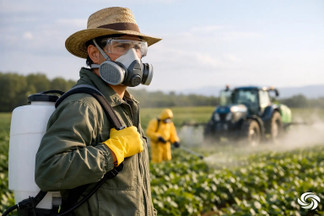
Chemical mixing and spray operations typically require sealed goggles or other splash-resistant eye protection. If there is a risk of forceful splash, a face shield may be needed in addition to goggles, not as a substitute. For grinding, cutting, and repair work in farm shops, impact-rated eye protection is essential, and face protection may need to be upgraded depending on the tool and material.
Fogging is a common complaint, especially in humid climates and high-exertion jobs. Anti-fog coatings and proper ventilation can make a real difference in compliance because workers are more likely to keep the gear on.
Respiratory protection depends on the actual airborne hazard
Dust masks are often treated as a catch-all in agriculture, but that can create a false sense of protection. Respiratory PPE has to be matched to the contaminant.
For dusty jobs such as grain handling, feed processing, sweeping, or work around bedding materials, a particulate respirator may be appropriate if the hazard assessment supports it. For pesticide application or exposure to certain vapors, a more protective respirator with the correct cartridges may be required. The same goes for some disinfecting chemicals used in animal operations and washdown procedures.
Fit, training, and cartridge selection are part of the equation. Respiratory protection is one of the easiest categories to get wrong if the purchase decision is based only on price or convenience. If a worker wears facial hair, uses the wrong cartridge, or skips fit testing where required, the protection level can drop fast.
Foot protection needs to handle terrain, moisture, and impact
Agriculture puts boots through mud, water, uneven ground, animal waste, sharp debris, and long hours of standing. The best footwear is usually task-specific rather than universal.
In wet environments, waterproof boots with slip-resistant outsoles are often the practical standard. In operations with puncture hazards, reinforced soles may be worth the investment. Where heavy equipment, pallets, or livestock create crush risks, protective toe footwear may be necessary.
Traction matters as much as durability. A tough boot that slips on wet concrete in a packing or washdown area creates its own hazard. In colder regions or refrigerated produce handling, insulated footwear can also be critical. Cold stress is not limited to outdoor winter work. It can affect workers moving in and out of chilled storage areas throughout the day.
Protective clothing should be based on contamination and environment
The right clothing in agriculture is often overlooked because people focus first on gloves, boots, and eyewear. But torso, arm, and leg protection can be the difference between manageable exposure and a recordable injury.
For pesticide handling, coveralls or chemical protective clothing may be necessary depending on the label requirements and the task. For general field work, long sleeves and durable workwear help reduce scrapes, plant irritation, sun exposure, and minor contact hazards. In muddy or wet operations, outerwear that sheds moisture without restricting movement can improve both safety and productivity.
There is also a heat stress trade-off. More coverage can reduce skin exposure, but it can also increase heat burden in hot weather. That means buyers should think beyond protection level alone and consider breathable materials, job rotation, hydration practices, and whether the garment is realistic for the local climate.
Hearing protection is easy to underestimate
Tractors, harvesters, blowers, chainsaws, grain systems, and shop equipment can all create harmful noise levels. Because hearing damage builds over time, it is often ignored until it is permanent.
Earplugs and earmuffs both have a place in agriculture. Earplugs are lighter and often easier for mobile workers, while earmuffs can be easier to supervise and may work better in intermittent high-noise tasks. In dirty environments, hygiene and replacement schedules matter. Reusable hearing protection that is not maintained properly can create its own problems.
Head protection and high-visibility gear are task-driven
Not every agriculture role requires a hard hat, but many do. Orchard work, construction within farm facilities, overhead loading, tree work, and maintenance around equipment can all justify head protection. The same applies when contractors and farm staff share active work zones.
High-visibility apparel is another category that depends on traffic and equipment movement. Workers near roads, loading areas, utility vehicles, or low-light operations are easier to spot in compliant hi-vis gear. On large farms and mixed-use operations, that visibility can help reduce struck-by incidents, especially during harvest and early morning loading.
Cold-weather and cold-storage PPE matter more than many farms expect
Agriculture is not only a heat-stress industry. Produce operations, dairy, food processing support areas, and cold-storage handling can expose workers to refrigerated and freezer conditions that require specialized PPE.
Insulated jackets, bibs, thermal gloves, and freezer-rated outerwear help protect workers who move products through low-temperature environments or spend extended time in chilled areas. The challenge is mobility. Bulky gear can slow handling tasks and increase fatigue, so cold-weather PPE should be selected for temperature rating, range of motion, and grip performance as a package, not as separate items.
This is one area where working with a supplier that understands both standard industrial PPE and freezer wear can simplify purchasing and reduce mismatched orders.
How buyers can choose the best PPE for agriculture workers
The best buying decisions usually start with a hazard assessment by task, not by job title. A farm mechanic, chemical applicator, livestock handler, and packing-line worker may all be called agricultural employees, but their PPE requirements are not interchangeable.
It also helps to think in terms of wear conditions. Will the gear be exposed to washdown, manure, chemical splash, UV, or repeated abrasion? Will workers wear it for ten minutes or ten hours? PPE that meets the hazard on paper but fails under real use conditions will not deliver the protection you need.
Standardization still has value, especially for training and replenishment. But it should happen in layers. Standardize where the hazard is truly common, then build task-specific kits for high-risk activities like spraying, confined maintenance work, welding repairs, or cold-room handling.
For multi-site agricultural operations, replenishment planning matters too. Gloves, eyewear, and disposable respiratory products can disappear quickly during peak season. Keeping consistent SKUs and reorder cycles in place reduces downtime and helps maintain compliance.
The right PPE program for agriculture is the one that fits the hazards workers actually face, stands up to the environment, and is practical enough to use every day. If your current gear checks only one of those boxes, it is probably time to reassess before the next busy season puts that gap to the test.