

Jul 25th 2026
Best Gloves for Sheet Metal Work: What to Buy
A sheet-metal edge can open an unprotected hand before a worker has time to react. The best gloves for sheet metal are not simply the gloves with the highest cut rating. They are the gloves that match the material, edge condition, handling method, and precision required without creating a new hazard through poor fit, lost grip, or restricted movement.
For safety managers and procurement teams, glove selection should begin with the actual exposure. A worker carrying deburred duct sections faces a different risk than an operator feeding sharp blanks into a press brake, clearing scrap, assembling HVAC components, or handling oily galvanized panels. The right specification protects hands while allowing crews to keep material under control and stay productive.
What Makes the Best Gloves for Sheet Metal?
Cut resistance is the central requirement, but it is only one part of a sheet-metal glove program. Sheet metal can have razor-sharp unfinished edges, burrs, punched openings, corners, and slivers. It can also be oily, hot, cold, wet, or coated with residues that affect glove grip and material compatibility.
Start with ANSI/ISEA 105 cut resistance. This standard measures how much force a glove material withstands before a blade cuts through it. Ratings run from A1 through A9, with higher numbers indicating greater cut resistance. An ANSI A2 glove may be appropriate for light handling of smooth, finished material. For common fabrication, ductwork, stamping, and metal-part handling, many operations need A4 through A6 protection. High-exposure tasks involving sharp blanks, heavy gauge material, or unpredictable edges may justify A6 through A8 gloves.
A higher rating is not automatically better. High-cut gloves can be thicker, less flexible, and less comfortable in detail work. If workers cannot feel an edge, grip a fastener, or safely operate controls, they may remove the gloves. The practical goal is the lowest cut level that adequately controls the documented hazard while preserving the dexterity the task demands.
ANSI cut level should match the task
Job hazard analysis should guide the specification. Observe how workers contact material, not just what material they touch. A cut level suitable for moving finished sheet stock may be inadequate when workers reach into a bin of sharp offcuts or guide parts around a machine.
Consider the metal thickness, whether edges are deburred, the frequency of handling, the force used, and whether workers encounter sharp edges unexpectedly. Also account for the consequence of a dropped panel. A glove that resists cutting but has poor grip can increase hand injuries, foot injuries, and product damage.
Choose the Right Glove Construction
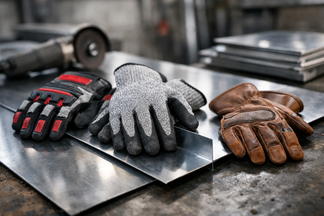
For most sheet-metal applications, a seamless knit glove with a cut-resistant liner is the workhorse option. Common liner fibers include engineered yarns made with high-performance polyethylene, fiberglass, steel, or composite materials. These gloves can provide reliable cut protection with a close fit that supports inspection, assembly, and repetitive handling.
Coating selection matters as much as the liner. A coating improves grip, adds abrasion resistance, and can help keep sharp edges from sliding across the palm. The correct coating depends on the work environment.
Nitrile-coated gloves are a strong all-purpose choice for dry-to-light-oily sheet-metal work. They generally provide good abrasion resistance and dependable grip around metal parts. Sandy nitrile finishes can improve traction on oily or slick surfaces, making them useful for fabrication lines, maintenance work, and material handling.
Polyurethane-coated gloves are often preferred where dexterity and tactile control are the priority. They work well for light-gauge metal assembly, inspection, and handling parts where workers need to feel edges and maintain fine control. Their lighter coating may not last as long in abrasive, heavy-duty handling.
Latex coatings can offer strong dry grip, but they require careful consideration where latex sensitivity is a concern. They also may not be the best choice for oil exposure. For wet, oily, or contaminated operations, test candidate gloves under real conditions rather than relying on a generic grip claim.
Palm coating, full coating, or sleeve coverage?
Palm-coated gloves provide breathability and flexibility for routine handling. They are often the best balance for workers who need protection on the contact surface without excessive heat buildup during a shift.
A fully coated glove can provide more coverage when workers contact wet surfaces, oils, or residues throughout the task. The trade-off is reduced breathability. If workers need protection beyond the wrist - such as when reaching into racks, handling large panels, or working around exposed sharp edges - specify a longer cuff or an integrated cut-resistant sleeve. Wrist and forearm lacerations are often missed when a glove program focuses only on the hand.
Do Not Treat Cut Resistance as Puncture Protection
Sharp sheet metal can cut, but pointed scrap, wire, burrs, and fasteners can puncture. ANSI cut ratings and puncture ratings measure different hazards. A glove that performs well against a moving blade may not provide the same protection against a concentrated point.
Review puncture exposure separately, especially in scrap handling, demolition, maintenance, and waste-stream operations. Abrasion resistance also matters. Repeated contact with rough metal surfaces can wear through coatings and liners, reducing the protection workers expect.
For press brake, shear, stamping, and other machine operations, gloves require additional review. Gloves can create an entanglement or caught-in hazard around rotating equipment, rollers, conveyors, or certain automated machinery. Follow machine manufacturer requirements, site lockout/tagout procedures, and task-specific risk assessments. A cut-resistant glove is not a substitute for guards, safe handling tools, or proper machine safeguarding.
Fit, Comfort, and Grip Drive Real-World Protection
A glove that meets the specification on paper can still fail in use. Loose fingertips reduce control and can snag. A glove that is too tight causes fatigue, limits circulation, and may be removed during the shift. Poorly sized gloves also make it harder to manipulate sheet edges safely.
Issue a size range and allow workers to try gloves during the actual task. Have them pick up panels, handle fasteners, use tools, and operate controls. The evaluation should include workers from every affected shift, not only a supervisor handling a sample for a few minutes.
Watch for heat buildup, liner irritation, and loss of grip once gloves become dirty. Gloves used around sharp metal should be inspected frequently for cuts, worn coatings, exposed yarns, holes, contamination, and stiffness. Establish a replacement trigger instead of expecting workers to judge whether a glove is still serviceable after it has been damaged.
Selecting Gloves for Common Sheet-Metal Tasks
A practical glove matrix can simplify purchasing and standardize protection across facilities. The final choice should always follow the site hazard assessment, but these starting points help narrow the field.
- Light assembly and inspection: ANSI A2 to A4, thin knit construction, and a polyurethane or light nitrile palm coating for dexterity.
- General fabrication and HVAC duct handling: ANSI A4 to A6, with a nitrile-coated palm for a balance of cut resistance, grip, and wear life.
- Sharp blanks, stamped parts, and heavy-gauge handling: ANSI A6 to A8, with durable grip and a cuff or sleeve where forearm exposure exists.
- Oily metal, maintenance, and material movement: ANSI A4 to A6 with a sandy nitrile or comparable oil-grip coating, verified under actual site conditions.
- Cold sheet-metal work or freezer-adjacent operations: a cut-resistant insulated glove designed to maintain flexibility in low temperatures. Standard cut gloves can become stiff and lose useful grip in cold environments.
Build a Procurement Standard That Holds Up
Standardizing gloves reduces confusion, simplifies replenishment, and supports consistent training. However, one glove for every department often means one glove that is wrong for several jobs. A better approach is to establish approved options by task category, cut level, coating, cuff length, and environmental condition.
Document the ANSI cut rating, desired grip type, available sizes, color-coding if used, and replacement criteria. Require product documentation from suppliers and retain it with your PPE records. If gloves are used in food processing, pharmaceutical production, or other controlled environments, include applicable cleanliness, material, and facility requirements in the purchasing specification.
ASA, LLC can support teams that need standards-based industrial glove options alongside broader PPE requirements, including cold-weather and freezer protection. For multi-site buyers, a defined glove matrix also makes bulk ordering and repeat replenishment more predictable.
The most effective glove program is the one workers can use correctly every shift. Put representative gloves in the hands of the people handling the metal, validate their performance against the real hazard, and make replacement stock easy to access before worn gloves become an injury report.