

May 27th 2026
8 Best Police Rain Jackets for Duty Use
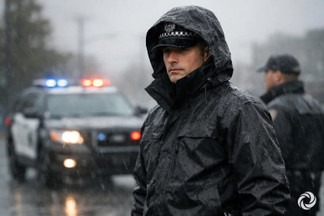
A rain jacket that works on a five-minute walk from the parking lot is not the same thing as a jacket that has to perform through a traffic stop, perimeter assignment, crash response, or hours of patrol in driving rain. The best police rain jackets are built for movement, visibility, access to duty gear, and long wear under real field conditions. If you are buying for a department, security team, or municipal crew, the right choice comes down to more than staying dry.
What makes the best police rain jackets different
Police rainwear has a narrow job to do. It needs to block wind and water without slowing down radio access, belt access, or range of motion. That sounds straightforward until you account for body armor, layered uniforms, night operations, and varying assignment types.
A patrol officer working vehicle stops has different needs than a traffic unit directing lanes in a storm. Bike patrol, transit officers, sheriff's deputies, parking enforcement, and public safety teams also put different stress on the garment. That is why the best police rain jackets are usually chosen by use case first, then by fabric and feature set.
Waterproof performance matters, but so does how the jacket handles heat buildup. A fully waterproof shell can become uncomfortable fast if it traps too much internal moisture. On the other hand, a highly breathable jacket that wets out under prolonged exposure will not hold up on a long shift. For most departments, the right answer is a balance of waterproof construction, breathability, and duty-specific design.
The 8 best police rain jackets by use case
1. The standard patrol shell
This is the most common and most useful option for general law enforcement work. A standard patrol shell is usually waist-length or hip-length, dark in color, waterproof, and sized to fit over a uniform shirt and soft armor. It should have a storm flap, adjustable cuffs, a durable front zipper, and pockets that stay usable with gloves on.
This type works best for agencies that want one jacket that covers most conditions. The trade-off is that it may not be the lightest option for warm climates or the warmest option for cold-weather duty.
2. The high-visibility traffic jacket
Traffic enforcement, roadside response, and incident management often require enhanced visibility beyond standard dark outerwear. A high-visibility rain jacket with reflective striping can be the better fit where officers are exposed to moving vehicles or low-light roadside hazards.
For buyers, this category needs extra scrutiny. Visibility features should align with agency policy and the work environment. Some departments want full high-visibility designs for traffic units only, while others use darker jackets with limited reflective trim for patrol. The best choice depends on whether visibility or tactical discretion is the higher priority.
3. The lightweight packable rain shell
In warmer regions or transitional seasons, a heavier jacket may spend more time in a vehicle than on the body. A lightweight shell solves that problem. It gives officers quick weather protection without the bulk of a lined coat.
This style works well for supervisors, plainclothes units, and officers who need backup weather gear in a trunk bag. The compromise is durability. Packable jackets are convenient, but they generally do not match the abrasion resistance or long-term wear life of heavier duty shells.
4. The insulated rain jacket
Cold rain is where poor gear gets expensive. When temperatures drop and wind picks up, a shell alone may not be enough. An insulated waterproof jacket helps protect against both exposure and reduced performance during long outdoor assignments.
This option makes sense in northern states, mountain areas, and winter patrol operations. It can also support emergency response teams standing post for extended periods. The downside is reduced flexibility in milder weather. If your officers work across wide seasonal swings, a removable liner system may be more practical than fixed insulation.
5. The 3-in-1 duty jacket
A 3-in-1 setup combines an outer waterproof shell with a removable inner liner or fleece. For departments trying to simplify seasonal issue, this is often one of the most practical jacket formats available.
It gives wearers a rain shell for wet weather, an insulated layer for dry cold, and a combined system for winter storms. It also helps procurement teams reduce SKU sprawl. The caution is weight and bulk. Some 3-in-1 jackets feel heavier than purpose-built single-season gear, so fit testing matters before a large order.
6. The tactical rain jacket
A tactical rain jacket is built with lower-profile features, cleaner lines, and compatibility with armor carriers or specialized loadouts. It may include side zippers, reinforced shoulders, venting, and more streamlined pocket placement.
This type is useful for specialized units, field operations, and assignments where a traditional high-visibility shell is not appropriate. The trade-off is that some tactical models sacrifice visibility features and broad crossover utility in favor of mission-specific design.
7. The long rain coat for command or scene work
Not every police rain garment needs to be a short jacket. Longer waterproof coats still have a place, especially for command staff, transit details, event operations, and scenes where extended standing exposure is likely.
A longer cut offers better runoff protection over trousers and can be useful in sustained rain. It is less ideal for high-mobility duties, foot pursuits, or assignments where frequent vehicle entry and exit is part of the shift.
8. The public safety crossover jacket
Some organizations buy rainwear for mixed teams that include police, security, parking enforcement, EMS support, public works, or emergency management staff. In those cases, a crossover jacket with strong weather protection, optional identification panels, and practical visibility elements may deliver better value than a narrowly police-specific style.
This category can work especially well for municipalities and institutional buyers trying to standardize outerwear across departments while still meeting operational needs. The key is making sure the jacket does not become too generic to support duty requirements.
How to evaluate police rain jackets before you buy
Start with the assignment, not the catalog
The fastest way to buy the wrong jacket is to shop by appearance alone. Begin with where and how the garment will be used. Patrol, traffic, corrections transport, campus police, transit, and tactical operations all create different requirements for visibility, access, layering, and wear time.
A jacket that performs well for highway details may be too bright or bulky for regular patrol. A sleek tactical shell may look right on paper but fall short for traffic safety. Getting this right at the front end helps reduce returns, complaints, and inconsistent field use.
Check waterproof construction details
Fabric claims can be misleading if construction quality is weak. Look for sealed or taped seams, storm flaps, durable closures, adjustable cuffs, and a hood design that actually works with duty use. Water usually enters through openings and construction failures before the face fabric itself fails.
If jackets will be used heavily, abrasion resistance matters too. Wet weather often comes with repeated contact against seat edges, gear, and exterior surfaces. A lighter material may save money up front but wear out faster in fleet and patrol environments.
Consider visibility in context
Visibility is not a one-size-fits-all decision. Some officers need ANSI-compliant high-visibility rainwear for traffic exposure or roadway incident response. Others need low-profile dark outerwear with minimal reflective elements. Both can be correct depending on policy and hazard exposure.
For mixed-use fleets, it may make sense to issue different rain jackets by assignment rather than force one style on every role. That usually leads to better compliance and better field performance.
Fit matters more than many buyers expect
Police rain jackets have to work over uniforms, armor, and sometimes additional cold-weather layers. A jacket that is technically waterproof but restricts shoulder movement, bunches at the duty belt, or blocks access to gear will spend more time in the vehicle than on the officer.
Try sample sizes over actual duty configuration before placing a larger order. This is particularly important when buying insulated jackets, 3-in-1 systems, or shells intended to fit over external carriers.
Common buying mistakes
One common mistake is over-prioritizing price over wear life. In low-use settings, that may be acceptable. In active patrol, roadside response, and municipal field work, replacement cycles matter. A cheaper jacket that fails early usually costs more in disruption and reordering.
Another mistake is assuming all waterproof jackets are suitable for law enforcement. Many commercial rain shells lack the cut, access, visibility options, or durability needed for duty use. Police rainwear should be judged as operational equipment, not casual apparel.
A third issue is failing to account for climate. Departments in Florida or the Gulf Coast may need lighter, more breathable shells for frequent warm rain. Agencies in the Midwest or Northeast often need systems that can handle cold rain, wind, and layering. The best police rain jackets are always local to the hazard, even when the product category is the same.
What professional buyers should prioritize
For procurement teams, the strongest buying decisions usually come down to consistency and field suitability. Standardized sizing, durable construction, visibility options, and dependable replenishment matter more than trend-driven features. If a jacket helps keep officers dry, visible when required, and able to perform without adjustment throughout the shift, it is doing its job.
ASA, LLC works with professional buyers who need that kind of clarity across PPE categories - especially when operational demands, compliance concerns, and repeat purchasing all have to line up. Rain gear is no different.
The right police rain jacket is the one officers will actually wear when the weather turns and the call still has to be answered.