

May 15th 2026
Which Respirator for Chemical Fumes?
A worker opens a drum of solvent, catches a sharp sweet odor, and reaches for the same disposable mask used for dust. That is where respiratory protection decisions go wrong. If you are asking which respirator for chemical fumes, the answer is almost never a basic dust mask. It depends on the chemical, its concentration, the oxygen level, and whether your team needs protection from vapors, gases, particulates, or a combination of hazards.
For safety managers and procurement teams, the goal is not just to buy a respirator. It is to match the respirator type, cartridge, filter, and fit requirements to the actual exposure profile in your facility. The wrong choice can leave workers exposed while still creating a false sense of compliance.
Compare industrial respiratory protection equipment by facepiece type, filter or cartridge family, application, compatibility, and program needs.
Which respirator for chemical fumes depends on the hazard
"Chemical fumes" is a broad term, and that is part of the problem. In industrial settings, workers may be exposed to organic vapors from solvents and coatings, acid gases from cleaning or processing chemicals, metal fumes from welding, or airborne particulates generated during handling and transfer. These are not controlled with the same respiratory equipment.
A disposable filtering facepiece respirator such as an N95 is designed primarily for particulates. It can help with dusts, some mists, and certain non-oil aerosols. It does not protect against most chemical vapors or gases. If the exposure involves solvent vapors, paint fumes, degreasers, adhesives, pesticides, or many maintenance chemicals, you are typically looking at an air-purifying respirator with the correct chemical cartridge.
That distinction matters during purchasing. Teams often ask for a "fume mask" when they actually need a half mask or full facepiece respirator with organic vapor cartridges, acid gas cartridges, or combination cartridges that address both vapor and particulate hazards. The term used on the floor may be informal, but the selection process cannot be.
The main respirator types used for chemical fumes
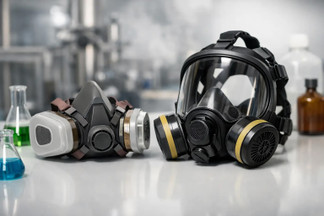
In most facilities, chemical fume protection starts with elastomeric air-purifying respirators. These are reusable half mask or full facepiece units that accept replaceable cartridges and filters. The facepiece provides the seal, while the cartridge provides the chemical protection.
A half mask respirator is often suitable when the primary concern is inhalation exposure and eye irritation is not a significant hazard. It is commonly used for solvents, coatings, adhesives, and many maintenance chemicals when paired with the correct cartridges. It is a practical choice for routine operations because it balances protection, cost control, and replaceable components.
A full facepiece respirator adds eye and face protection while typically providing a higher assigned protection factor than a half mask. If the chemical also irritates the eyes, or if the concentration and task justify greater respiratory protection, the full facepiece is usually the better option. In chemical handling environments, that added protection can simplify PPE selection because it addresses more than one exposure route.
For higher hazard conditions, unknown concentrations, or situations where air-purifying cartridges are not appropriate, supplied-air respirators enter the discussion. These systems deliver breathable air from a clean source and are used when contaminants are too concentrated, cartridges are not available for the chemical, or oxygen levels may be deficient. In those cases, asking which respirator for chemical fumes is really a question of whether air-purifying respirators are allowed at all.
Cartridge selection is the real decision point
Once the facepiece style is identified, cartridge selection becomes the critical step. Cartridges are not universal. Organic vapor cartridges are commonly used for solvents such as paint thinners, degreasers, and many petroleum-based chemicals. Acid gas cartridges are intended for hazards such as chlorine, sulfur dioxide, hydrogen chloride, and similar exposures. Some tasks require combination cartridges that protect against multiple gases or vapors, sometimes with a particulate filter added.
This is where safety programs can break down. Workers may smell a chemical and assume any cartridge will help. It will not. Cartridges must be matched to the contaminants identified in the hazard assessment and supported by the manufacturer’s approval and use instructions. If your process involves mixed chemicals, intermittent exposure, or changing production tasks, the cartridge plan needs to reflect that complexity.
Odor is not a reliable warning sign, either. Some chemicals can desensitize smell, and some hazardous concentrations may occur before workers detect an odor. That is why cartridge change schedules matter. Waiting until someone smells breakthrough is not an acceptable control method for many chemicals.
When a disposable respirator is enough and when it is not
There are chemical operations where a disposable respirator may still have a place. If the hazard is a particulate generated by chemical handling, such as nuisance dust, powder transfer, or certain mists, a properly selected filtering facepiece may be suitable. In those cases, the hazard is not the vapor itself but the airborne particles.
But if the task produces vapors or gases, a disposable particulate respirator is generally not the right answer. This is one of the most common purchasing mistakes in maintenance, warehousing, and light industrial operations. A low-cost mask may look like respiratory protection, but appearance is not protection. The respirator must be approved for the actual contaminant.
Fit, facial hair, and worker acceptance matter
Even the correct cartridge will fail if the facepiece does not seal. Tight-fitting respirators require fit testing and a clean seal against the face. Facial hair that crosses the sealing surface can compromise performance enough to make the respirator ineffective.
This creates a practical issue for supervisors and buyers. Respirator programs work better when the selected models fit a wide range of face shapes and are comfortable enough for the actual work cycle. Heat, humidity, communication demands, and compatibility with hard hats, eye protection, and chemical splash gear all affect whether workers wear the respirator correctly and consistently.
A half mask that workers remove every 20 minutes because it is uncomfortable is not a successful selection. In many facilities, standardization around a limited number of approved respirator platforms improves training, inventory control, and cartridge replacement compliance.
OSHA requirements shape the purchase, not just the hazard
Respirator selection for chemical fumes is not only a product decision. It sits inside OSHA’s respiratory protection framework. If respirators are required, employers generally need a written respiratory protection program, medical evaluations, fit testing for tight-fitting respirators, training, and procedures for cleaning, storage, inspection, and cartridge change-out where applicable.
That matters for procurement because the lowest unit cost may not be the lowest program cost. Reusable respirators require maintenance and replacement parts. Disposable options may appear simpler but may not meet the hazard. Full facepiece units may cost more upfront but reduce the need for separate eye protection in some chemical environments. Supplied-air systems carry higher setup costs but may be necessary for the process. The right choice balances compliance, exposure control, and operational practicality.
How to decide which respirator for chemical fumes in your facility
Start with the safety data sheet, exposure monitoring data if available, and a task-level hazard assessment. Identify the exact chemical or chemical family, expected concentration, duration of exposure, and whether there is any risk of oxygen deficiency or unknown airborne conditions. Then determine whether the hazard is particulate, vapor, gas, or mixed.
From there, select the respirator type that is approved for those conditions. For many routine industrial tasks involving solvents and similar chemicals, that means a half mask or full facepiece air-purifying respirator with the correct cartridges. If eye irritation is part of the hazard, the full facepiece often makes more sense. If concentrations are high, unknown, or beyond cartridge use limits, move to supplied air.
Then address the operational details. Make sure the respirator works with the rest of the PPE ensemble. Confirm cartridge availability and replacement planning. Set a change schedule based on manufacturer guidance and your exposure profile. Train supervisors so they know the difference between dust masks, vapor cartridges, and combination protection.
For buyers managing multiple sites, consistency matters. A standardized respiratory platform can reduce training gaps and simplify stocking, but only if the hazards are similar across locations. If one site handles acids and another mainly uses solvents, a one-size-fits-all cartridge decision can create risk.
ASA, LLC works with organizations that need to make these decisions at scale, where the right respirator choice affects not only worker safety but also audit readiness, inventory efficiency, and uptime.
The best respirator for chemical fumes is the one matched to the actual contaminant, fitted to the worker, and supported by a compliant respiratory program. If there is any uncertainty about the hazard, slow the purchase down long enough to verify the exposure. Respiratory protection is one area where being almost right is still wrong.