

Jun 27th 2026
Traffic Signal Crew PPE That Fits the Job
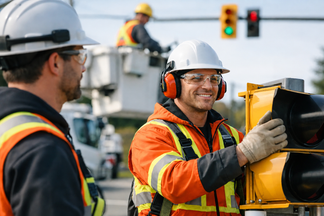
A traffic signal crew working a live intersection does not have the luxury of a controlled environment. Vehicles keep moving, visibility changes by the minute, and the work can shift from cabinet access to pole climbing to trench or bucket operations in the same shift. That is why traffic signal crew PPE cannot be treated like a generic roadwork kit. The right selection has to reflect struck-by hazards, electrical exposure, fall risk, weather, and the practical reality that crews need to move, signal, climb, and handle tools without fighting their gear.
For safety managers and procurement teams, the challenge is not just buying PPE. It is standardizing a kit that meets the task, holds up in field conditions, and helps crews stay compliant without slowing production. In traffic signal work, the best PPE program is specific, not broad.
What makes traffic signal crew PPE different
Traffic signal work sits at the intersection of several hazard categories. Crews may be exposed to active roadway traffic, overhead work, energized components, poor weather, low-light conditions, and uneven ground. A signal technician replacing a controller component faces a different risk profile than a laborer setting foundations or a bucket operator installing mast-arm hardware, but they still need a coordinated PPE program.
That is where many purchasing mistakes happen. A high-visibility vest alone is not a traffic signal PPE program. Neither is a hard hat and work gloves issued across every municipal department. Signal crews often need layered protection that accounts for task changes throughout the day.
A useful way to think about it is this: traffic signal crew PPE has to support visibility, impact protection, hand protection, eye and face protection, foot stability, weather readiness, and, when the task requires it, electrical and fall protection. If one of those categories is weak, the whole system starts to break down.
Core traffic signal crew PPE categories
High-visibility apparel for active roadway exposure
High-visibility apparel is the most visible part of the program, but it still needs careful specification. Garments should align with roadway work exposure and environmental conditions, not just meet a minimum purchasing checklist. For many traffic signal operations, that means ANSI/ISEA-compliant high-visibility shirts, vests, jackets, or rainwear selected for day and night visibility.
The trade-off is straightforward. Lightweight vests are cooler and less restrictive, but they may not be enough in foul weather or low-light operations. A hi-vis jacket or Class 3 garment increases conspicuity and seasonal utility, but it can add heat stress in warmer climates. Buyers in states with long heat seasons, like Florida or Texas, often need separate warm-weather and storm-weather options rather than trying to force one garment to cover the full year.
Head protection that works with the task
Hard hats remain essential for overhead hazards, bucket work support activity, and construction-zone exposure. But style and accessory compatibility matter. A basic cap-style hard hat may be fine for ground crews, while climbing or elevated work may call for a more secure fit and chin strap depending on the task and site policy.
Compatibility with eye protection, face shields, hearing protection, and cold-weather liners also matters more than many buyers expect. If accessories do not integrate well, crews improvise. That usually leads to lower wear compliance.
Eye protection for debris, dust, and drilling activity
Traffic signal crews regularly cut, drill, grind, pull wire, and open cabinets exposed to dust and debris. Safety glasses with side protection are the baseline, but not always the finish line. Windy roadside work, concrete dust, and overhead drilling may justify sealed or foam-lined eyewear, while cutting and grinding tasks may require face shield use over primary eye protection.
Lens choice is not trivial either. Clear lenses help in low-light work and overcast conditions. Tinted lenses improve comfort in bright sun but can reduce visibility in shaded cabinet work or evening operations. For many teams, issuing both is more practical than trying to split the difference.
Gloves that match signal work, not just general labor
Hand protection is where task-specific buying pays off quickly. Traffic signal crews can move from material handling to wire pulling to hardware installation in one shift. A bulky glove may protect well during loading and setup, but it can reduce dexterity when landing conductors or working small fasteners inside a cabinet.
This usually calls for more than one glove type. A durable general-purpose glove can cover handling and construction support, while a thinner, higher-dexterity glove supports finer electrical or control work. If crews are exposed to energized tasks, rubber insulating gloves with appropriate leather protectors and testing protocols become a separate requirement, not a substitute for ordinary work gloves.
Footwear for traction, support, and site variability
Signal work often involves gravel shoulders, muddy verges, paved intersections, trenches, ladders, and curb transitions. Footwear needs slip resistance, stability, and enough support for long periods on foot. Safety toe protection may be appropriate for many crews, especially where material handling and tool drops are common.
The detail buyers sometimes miss is outsole performance in mixed conditions. A boot that performs well on dry pavement may not do as well on wet grass, mud, or oily equipment surfaces. Waterproofing is another it-depends decision. It helps in wet weather and ditch or foundation work, but in hot climates it can reduce breathability. Some departments are better served by seasonal footwear specifications than one year-round model.
When traffic signal crew PPE needs to go beyond the basics
Electrical hazard protection
Not every signal task is energized work, but electrical exposure is built into the trade. That means PPE decisions should be informed by actual task assessment, not assumptions. Arc-rated clothing, voltage-rated gloves, face protection, and other electrical PPE may be required for certain troubleshooting, testing, or cabinet tasks depending on the equipment condition and the work practice.
This is where overbuying and underbuying both create problems. Over-specifying electrical PPE for every task can reduce comfort and wear compliance. Under-specifying it creates obvious risk. The better approach is job-based allocation tied to documented procedures and supervisor enforcement.
Fall protection for bucket and elevated work
When crews work from aerial devices or in other elevated positions, fall protection becomes part of the PPE program. Harnesses, lanyards, connectors, and anchorage compatibility need to be selected as a system. Comfort matters because poorly fitting harnesses are not just unpopular - they can interfere with movement, tool access, and proper use.
For procurement teams, this is one of the clearest examples of why category buying alone is not enough. A compliant harness on paper is not necessarily the right harness for a signal crew using specific bucket trucks and tools.
Weather protection and layered systems
Traffic signal work does not stop because the weather turns. Rain gear, insulated outerwear, cooling accessories, and cold-weather hand protection all affect whether a crew can stay safe and productive. In the Southeast, breathable hi-vis rainwear often matters more than heavy insulation. In colder regions, insulated waterproof gloves and thermal layers become necessary for maintaining dexterity and judgment.
Layering usually works better than one oversized outer garment. It gives supervisors more flexibility across changing conditions and helps avoid the common problem of workers removing required hi-vis or protective gear because they are overheating.
How to build a better PPE specification for signal crews
The strongest programs start with tasks, not products. Separate the crew’s work into real operating categories such as traffic control setup, excavation support, pole and mast-arm installation, cabinet troubleshooting, bucket operations, and bad-weather response. Then identify which PPE is universal and which is task-specific.
That approach helps control cost as much as it improves safety. Not every worker needs every premium item every day. But every worker does need the right baseline gear, in the right size range, with task-triggered access to higher-protection equipment.
Standardization also matters. When crews across locations are issued mixed products with different visibility ratings, glove styles, or hard hat systems, training and compliance get harder. Buyers responsible for municipal or contractor operations across multiple sites often benefit from narrowing approved options while still allowing for climate and job-role differences.
Fit should not be treated as an afterthought. Poorly fitting gloves reduce dexterity, oversized vests snag, and boots that are uncomfortable by mid-shift drive lower compliance. A PPE program only works if crews can wear the equipment consistently through a full day of fieldwork.
Common buying mistakes to avoid
One common mistake is treating roadway visibility as the only issue. Another is relying on one glove, one garment, or one boot style for every season and task. Traffic signal work changes too much for that.
A second mistake is ignoring replacement cycles. High-visibility garments fade, gloves lose grip, hard hats age, and eyewear gets scratched. If replenishment is slow or inconsistent, crews keep using gear past the point where it performs well. That affects both safety and morale.
A third mistake is separating safety from procurement. The best results come when safety managers, supervisors, and purchasing teams build the spec together. That reduces mismatch between written requirements and what the crew will actually wear in the field.
For organizations managing repeat orders, it helps to work with a supplier that understands industrial compliance, field-use conditions, and category depth. ASA, LLC supports buyers who need that kind of practical alignment between standards, product selection, and replenishment.
The right PPE program for a traffic signal crew should make the work safer without making the job harder. If your gear selection matches the actual tasks, climate, and exposure profile of the crew, compliance gets easier and the field day runs smoother.