


May 14th 2026
Pallet Covers for Cold Storage That Work
A wrapped pallet can leave a freezer in spec and arrive at the dock with product temperatures already drifting. That gap between controlled storage and real-world handling is where pallet covers for cold storage earn their value. For safety managers, warehouse leaders, and procurement teams, the question is not whether a cover looks durable. It is whether it helps protect product integrity, supports handling speed, and holds up under repeated use in sub-zero environments.
Why pallet covers for cold storage matter
Cold storage operations are full of short exposure events that add up. A pallet may wait during staging, move through a dock area, sit during loading, or transfer between refrigerated zones. Even when each stop is brief, the total temperature gain can be enough to affect frozen food, temperature-sensitive ingredients, pharmaceuticals, or other regulated goods.
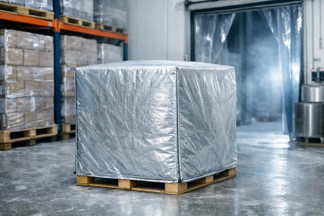
Pallet covers for cold storage help slow that temperature rise by adding an insulating layer around the load. That sounds simple, but the operational benefit is broader than thermal protection alone. A well-matched cover can also reduce frost buildup from condensation, shield loads from airflow shifts near doors, and help keep packaging in better condition during internal transport.
In busy warehouses, that matters because product loss rarely comes from one dramatic failure. More often, it comes from repeated small breaks in temperature control, rough handling, and equipment that is not suited to the environment.
What a cold storage pallet cover actually does
At a practical level, a pallet cover creates a thermal barrier between the product and the surrounding air. The better covers are designed to slow heat transfer during movement and staging, especially when a pallet leaves a freezer or cooler and enters a warmer loading area.
The cover is not a substitute for refrigerated transport, and it is not meant to correct long dwell times or poor dock discipline. That is an important distinction for buyers. A pallet cover is a supporting control, not a fix for process failures. It works best when paired with disciplined handling procedures, proper trailer temperatures, and trained crews.
That said, the right cover can buy meaningful protection time. In operations where pallets move through multiple handoff points, that extra protection can reduce spoilage risk and provide more consistency from storage to shipment.
Material and construction make the difference
Not all insulated covers perform the same way in freezer conditions. Material selection affects thermal performance, flexibility, cleanability, and service life.
Multi-layer insulated covers are common because they balance temperature resistance with manageable weight. Reflective outer layers can help reduce radiant heat gain in loading areas, while internal insulation slows transfer through the cover itself. Seams, closures, and fit matter just as much as the core material. If the cover gaps at the corners or leaves the pallet base exposed, performance drops quickly.
For food processing and cold chain use, surface cleanability is another factor. Covers used around packaged food or regulated materials should be able to handle routine sanitation protocols without rapid breakdown. In facilities with frequent washdown or strict hygiene requirements, this point should be evaluated before a bulk purchase rather than after deployment.
Durability is where trade-offs usually show up. Heavier covers may last longer and insulate better, but they can slow handling if crews are moving fast or managing high pallet counts. Lighter covers are easier to deploy, though they may not hold up as well in high-abrasion environments or repeated forklift contact. The right choice depends on the load profile and handling frequency.
How to choose pallet covers for cold storage
The best buying decision starts with the actual use case, not a generic temperature claim. A cover that works for short dock transfers may not be enough for multi-stop food distribution or outdoor staging in humid conditions.
Start with exposure time
Ask how long the pallet is typically outside its controlled environment. A five-minute move across a facility is different from a 30-minute wait at a shipping lane. If your operation experiences routine delays, the cover needs to be selected for that real dwell time, not ideal workflow assumptions.
Match the cover to the temperature range
Consider both product temperature and ambient exposure. Frozen goods moving from 0°F storage into a warm dock face a different challenge than chilled goods moving through a cooled packing area. Some covers are designed for freezer applications, while others are better suited to refrigerated transfer.
Look at pallet size and load shape
Standard pallets are only part of the picture. Tall mixed loads, overhang, and irregular packaging can create air gaps or stress points. A poor fit reduces thermal performance and shortens product life. If loads vary by department, it may make more sense to standardize a small range of sizes rather than force one cover across every application.
Evaluate closure design
Open-bottom throw-over styles are quick, but they may not give enough protection for longer exposures. Full-enclosure designs provide better thermal control, though they can add handling time. For high-throughput operations, that balance between protection and speed matters.
Consider reusability and replacement cycles
Reusable covers can reduce long-term cost, but only if they survive the environment and are returned for reuse. In some operations, loss, damage, or sanitation constraints can make disposable or limited-cycle options more practical. This is one of those areas where the lowest unit price does not always produce the lowest total cost.
Operational issues buyers should not overlook
A pallet cover is only useful if crews will actually use it correctly. That means deployment has to fit the pace of the warehouse.
If a cover is difficult to place, hard to secure with gloves on, or awkward to remove at receiving, compliance will drop. The result is predictable. Some pallets get covered, some do not, and temperature protection becomes inconsistent. For supervisors trying to maintain process discipline, product simplicity matters.
Storage and staging also deserve attention. Covers need a clean, accessible place near the point of use. If they are stacked across the building or mixed with unrelated materials, adoption suffers. Procurement teams sometimes focus on product specs and miss the workflow side of implementation.
Another issue is condensation. When frozen pallets move into warmer air, moisture can accumulate on packaging or the cover surface. A good insulated cover helps limit thermal shock, but facility procedures still need to address wet floors, slippery surfaces, and safe handling around docks.
When pallet covers are worth the investment
Pallet covers for cold storage make the strongest case in operations where product value, temperature sensitivity, or regulatory pressure is high. Frozen food distribution, food manufacturing, pharmaceutical handling, and temperature-controlled logistics are clear examples.
They also make sense where facilities have unavoidable transition points. If a warehouse has long travel paths, frequent door openings, congested staging lanes, or mixed-temperature zones, a cover can reduce the penalty of those conditions. The same is true during seasonal heat, when dock areas become harder to control.
Where they may be less effective is in operations trying to use covers as a substitute for refrigeration capacity, labor planning, or dock management. If pallets are regularly sitting too long because the process is broken, insulation alone will not solve the problem.
Supporting compliance and product protection
For many buyers, the decision is not just about preserving product. It is also about documentation, consistency, and defensible cold chain practices.
When a facility uses pallet covers as part of a documented temperature-control process, it can strengthen handling protocols and reduce variation between shifts or locations. That is useful for audit readiness, customer requirements, and internal quality control. It shows that the operation has addressed a known exposure point with a defined protective measure.
This is especially relevant for multi-site organizations and institutional buyers that need repeatable standards across facilities. A standardized cover program, backed by clear handling procedures, is easier to train, monitor, and reorder.
ASA, LLC has worked with industrial and cold-storage buyers since 2003, and this is often where the best equipment decisions are made - not around marketing claims, but around whether the product supports compliance, uptime, and predictable execution on the floor.
The better question to ask before you buy
Instead of asking which pallet cover is best, ask what failure you are trying to prevent. If the risk is brief exposure during transfer, your answer may be different than if the risk is prolonged dock staging, condensation, or repeated reuse damage.
That shift in thinking usually leads to a better purchase. It moves the conversation away from generic insulation language and toward actual operating conditions, load dimensions, sanitation needs, and labor realities. In cold storage, the right protective product is the one your team can use every day without slowing the job or compromising the load.
A pallet cover should help your operation hold the line between controlled storage and final shipment. If it fits the process, stands up to the environment, and supports consistent handling, it does more than cover a pallet. It protects the margin built into every temperature-sensitive load.