

Posted by Freddy Pineda on May 7th 2026
OSHA Fall Protection Requirements Construction
A crew can do everything else right on a project and still get exposed by one unprotected edge, one short ladder transition, or one worker tied off to the wrong anchor point. That is why OSHA fall protection requirements construction teams follow are not just a paperwork issue. They affect how work is planned, how equipment is selected, and whether the site stays productive after an inspection, near miss, or serious injury.
For safety managers, foremen, and procurement teams, the hard part is rarely knowing that fall protection matters. The hard part is applying the rule correctly across changing tasks, mixed trades, and shifting elevations. Construction sites are dynamic, and OSHA expects the protection method to match the actual hazard, not just the job title.
What OSHA requires for fall protection in construction
In most construction work, OSHA requires fall protection when workers are exposed to falls of 6 feet or more to a lower level. That 6-foot trigger is the number most people know, but it is only the starting point. The real compliance question is what type of work is being performed, where the worker is positioned, and whether the chosen system actually protects against the specific exposure.
Under OSHA fall protection requirements construction employers generally need to provide and ensure the use of guardrail systems, safety net systems, or personal fall arrest systems when employees are working at height. Depending on the task, other controls such as positioning device systems, warning line systems, controlled access zones, or covers may also come into play.
That is where many jobsites get into trouble. A site may have harnesses on hand, but a harness alone is not a compliant fall protection program. If the lanyard length, anchorage, clearance, swing fall exposure, or training is wrong, the worker is still at risk and the employer is still exposed.
The 6-foot rule is not the whole rule
OSHA construction standards include different requirements for different surfaces and operations. Unprotected sides and edges, leading edges, hoist areas, holes, formwork, ramps, runways, excavations, dangerous equipment, overhand bricklaying, roofing, wall openings, and residential construction can all raise different compliance questions.
For example, if a worker is near a floor hole, the issue may be a cover or guardrail, not a harness. If crews are performing roofing work on a low-slope roof, warning lines may be part of the solution, but only under specific conditions. If steel erection is involved, separate standards may apply. In aerial lifts, body belts may be permitted in some manufacturer-required tie-off applications, while standard personal fall arrest practices govern other situations. The point is simple: the hazard category matters.
This is why one-size-fits-all buying decisions often create risk. Purchasing a standard harness and lanyard package may cover some tasks, but not all of them. A ladder transition, a bucket truck, a horizontal lifeline setup, and rebar work each create different equipment and planning needs.
Common fall protection systems and where they fit
Guardrail systems are often the most reliable option because they protect multiple workers without requiring each person to tie off individually. They work well around open-sided floors, roof edges, mezzanines, and certain platform conditions. From a management standpoint, guardrails also reduce the chance that worker behavior alone determines compliance.
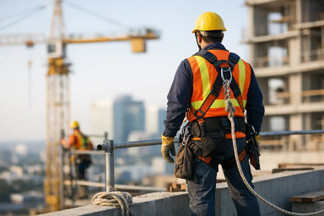
Personal fall arrest systems are common because they are flexible and mobile. But they must be complete and compatible. That means a properly fitted full-body harness, a connecting device such as a shock-absorbing lanyard or self-retracting lifeline, and a suitable anchorage. The anchorage requirement is frequently misunderstood. Tying off to a convenient beam clamp point, piece of conduit, or temporary structure does not make it compliant unless that point is rated and appropriate for the system.
Safety net systems are less common on many projects but still useful in specific high-exposure work where other methods are not practical. Covers are essential for holes and openings, but they must be able to support expected loads and be secured against movement. A piece of scrap plywood set loosely over an opening is not a reliable control.
When choosing systems, there is always a trade-off between mobility, productivity, and administrative control. Personal fall arrest gives flexibility but demands more training, inspection, and supervision. Passive systems like guardrails are simpler to enforce but may not be practical in every phase of construction.
OSHA fall protection requirements construction buyers should watch closely
If you are buying for a crew rather than a single worker, the equipment decision needs to go beyond price and basic availability. The first issue is compatibility. Harnesses, lanyards, retractables, anchor connectors, and rescue accessories should work together as a system. Mixing components across brands or specifications can create performance gaps, especially when deceleration distance and connector compatibility are not verified.
The second issue is task fit. Roofing, tower work, utility service, underground access, aerial construction, and cable installation can all involve different movement patterns and anchorage conditions. A standard dorsal D-ring harness may be enough for one application and inadequate for another that needs climbing features, positioning support, or arc-rated materials.
The third issue is environment. Dirt, moisture, UV exposure, concrete dust, grease, and sharp edges all shorten service life or affect performance. In some operations, especially those with outdoor winter work or temperature-controlled environments, workers may be wearing insulated layers or freezer gear under the harness. That changes sizing, adjustability, and comfort, which directly affects whether the equipment is worn correctly in the field.
Training is not optional and it is not one-time
OSHA expects employers to train workers who might be exposed to fall hazards. That training has to cover the nature of fall hazards in the work area and the procedures for minimizing those hazards. Workers also need to understand how to use and inspect the systems provided.
In practice, this is where good programs separate from weak ones. A short sign-off at orientation is rarely enough for crews working across multiple tasks and elevations. Workers need training that reflects the actual site conditions, including how to recognize improper anchorage, what clearance is required below a worker, and when equipment must be removed from service.
Retraining may be necessary when work conditions change, when systems change, or when there is reason to believe employees do not have the required understanding or skill. That is especially relevant for contractors managing temporary labor, subcontractors, and rotating crews.
Inspection, documentation, and rescue planning
OSHA compliance is not just about issuing gear. Equipment should be inspected before use, and employers should have a process for regular documented inspection according to manufacturer guidance and internal safety procedures. Webbing damage, chemical exposure, torn stitching, distorted hardware, and illegible labels can all be reasons to retire equipment.
Rescue planning is another area that gets ignored until it is too late. Arresting a fall is only part of the problem. If a worker is left suspended without a prompt rescue plan, the medical risk remains serious. On jobs using personal fall arrest systems, employers should know how they will respond, who is trained, and what equipment is available.
From an operations perspective, these details matter because post-incident delays are expensive. A site that cannot account for inspections, training, and rescue readiness is in a weaker position during an investigation or customer audit.
The most common compliance gaps on active jobsites
The usual failures are rarely exotic. Workers tie off too low and create excess free fall. Anchor points are assumed rather than verified. Covers are unmarked or unsecured. Harnesses are worn over bulky clothing with poor adjustment. Damaged lanyards stay in circulation because no one owns the inspection process.
There is also a planning gap that shows up early in a project. Estimators, superintendents, and purchasing teams may not align on where passive protection ends and personal protective equipment begins. When that happens, the field gets asked to solve a design and sequencing problem with whatever gear is in the gang box.
A stronger approach is to treat fall protection as part of pre-task planning and procurement, not just field enforcement. That means matching equipment quantities and configurations to the work phase, confirming lead times, and replacing worn gear before crews start improvising.
For teams that buy at scale, this is where working with a supplier that understands standards, use cases, and replenishment cycles adds real value. ASA, LLC supports professional buyers who need compliant equipment that fits the task, the environment, and the pace of the job.
What a practical compliance mindset looks like
The safest construction programs usually do not rely on a single rule or a single product category. They combine hazard assessment, passive protection where feasible, properly selected personal fall arrest systems where needed, worker training, routine inspection, and realistic rescue planning. They also recognize that conditions change from one phase of work to the next.
If your site has recurring questions about trigger heights, anchor selection, or whether a given setup satisfies OSHA, that is usually a sign the program needs more task-specific planning, not just more gear. The right fall protection system should make safe work easier to execute under real production pressure, because that is when compliance gets tested most.