

May 16th 2026
How to Choose an Industrial Safety Supplier
A failed glove spec, a backordered freezer jacket, or missing documentation for an audit can slow a shift faster than most buyers expect. Choosing the right industrial safety supplier is not just a purchasing decision. It affects injury prevention, compliance performance, crew readiness, and how well your operation holds up when conditions get demanding.
For safety managers, plant supervisors, and procurement teams, the real issue is not finding a company that sells PPE. It is finding a supplier that understands hazard categories, certification requirements, replacement cycles, and the operational pressure behind every order. The right partner helps you buy correctly the first time. The wrong one creates extra work, product gaps, and exposure you did not plan for.
What an industrial safety supplier should actually provide
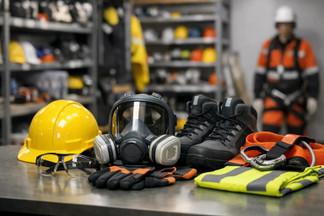
A capable industrial safety supplier does more than stock hard hats and safety vests. In regulated environments, the supplier should help align product selection with actual job hazards, applicable standards, and site conditions. That means understanding the difference between general-purpose PPE and gear built for chemical splash, arc exposure, cut hazards, low-visibility traffic zones, or sub-zero cold storage.
This matters because not all industrial environments fail in the same way. A distribution center may need high-visibility apparel, impact gloves, and cold-weather layering for loading docks. A food processing operation may need freezer wear, waterproof protection, and products suited to sanitation requirements. A wireline or aerial construction crew may need high-visibility garments, head protection, cut-resistant gloves, and fall protection that matches the task and the work height.
A supplier worth keeping should be able to support that kind of specificity. If every recommendation sounds generic, the fit is probably generic too.
Compliance support matters more than catalog size
Large catalogs can be useful, but breadth alone does not solve compliance problems. Buyers are usually better served by an industrial safety supplier that understands ANSI, ISEA, and OSHA-related requirements and can point teams toward products that meet the stated standard for the application.
That does not mean the supplier replaces your internal safety program. It means they should reduce the risk of buying the wrong class of garment, the wrong glove coating, or eye protection that does not match the work environment. Good support shortens decision time and lowers the chance of returns, field complaints, and avoidable reorders.
Documentation also matters. Professional buyers often need product specs, certification details, and clear descriptions that hold up during internal reviews and external inspections. If the information is vague at the point of purchase, it will still be vague when someone asks for proof later.
The product categories that separate strong suppliers from average ones
Most distributors can cover basic PPE. The difference shows up when hazards become more specific or environmental conditions become more severe. That is where buyers start to see whether a supplier has real category depth or just surface-level inventory.
For many operations, the essentials include high-visibility apparel, industrial gloves, safety eyewear, hard hats, respirators, hearing protection, and fall protection. Those categories need enough range to account for task variation, seasonality, and wear rates. A warehouse does not consume PPE the same way a chemical handling team or road crew does.
Cold environments are an especially good test. Freezer operations, refrigerated logistics, food distribution, and sub-zero storage facilities need more than insulated outerwear that looks warm on paper. They need freezer-rated gear built for actual exposure times, movement demands, and moisture conditions. That includes freezer suits, thermal gloves, insulated bibs, jackets, headwear, and sometimes support items like pallet covers or food transportation blankets. If a supplier treats cold-storage PPE as a side category, the buyer usually ends up piecing together solutions from multiple sources.
That fragmentation adds administrative work and increases the chance that some workers receive gear that is technically available but not appropriate for the temperature range or task.
Fulfillment and replenishment are part of safety performance
Industrial buyers rarely have the luxury of ordering only when convenient. PPE gets damaged, crews expand, weather changes, and a new contract can shift purchasing needs overnight. In that environment, fulfillment speed is not just a service metric. It is part of operational continuity.
A supplier should be able to support repeat purchasing without forcing your team to restart the selection process every time. Consistent stock, clear lead times, and account support all matter more when you are buying for multiple crews or facilities. The same goes for packaging accuracy and order completeness. A low price on paper loses value quickly if your team spends hours fixing partial shipments or sourcing substitutes at the last minute.
There is also a budget side to this. Bulk purchasing support, case quantities, and repeat-order efficiency can make a meaningful difference over a full year of PPE spend. Buyers should evaluate total purchasing friction, not just line-item cost.
Questions buyers should ask before committing
The best supplier evaluations are practical. Start with hazard fit. Can the supplier support the specific risks your teams face, not just broad PPE categories? If your environment includes chemical splash, freezer exposure, elevated work, cut hazards, or high-traffic visibility requirements, the answers should be clear and product-specific.
Next, look at standards knowledge. Can the supplier explain why one option is appropriate and another is not? That does not require legal language or sales jargon. It requires competence.
Then evaluate replenishment reliability. Ask how repeat orders are handled, what happens when an item is unavailable, and whether equivalent substitutions are reviewed carefully instead of pushed automatically. Substitution can be helpful, but only when it respects the original hazard requirement.
Finally, look at account support. A good supplier helps professional buyers move faster. That may mean support for bulk quotes, consistent reorder histories, or help narrowing options across several categories for a facility rollout.
Why specialization can reduce risk
There is a reason many organizations move away from broad-line suppliers for certain safety categories. When PPE is treated like a general commodity, product selection tends to become price-led and reactive. That can work for low-risk, standardized items. It breaks down when the work environment is more demanding.
Specialized suppliers tend to understand wear patterns, compliance questions, and environment-specific problems better. In freezer operations, for example, comfort and dexterity are not secondary concerns. If insulated gloves are too bulky for the task, workers may remove them. If outerwear restricts movement, compliance drops. If garments are not rated for the real temperature and exposure cycle, warmth claims do not help much on the floor.
The same principle applies across industries. Construction, logistics, food processing, warehousing, emergency response, and utility-related work all have different PPE failure points. A supplier with real depth sees those differences sooner.
One supplier or multiple vendors?
It depends on your operation. Some organizations prefer multiple vendors to compare pricing or fill specialty gaps. That can make sense if your internal team has the time to manage product consistency, vendor communication, and compliance tracking across categories.
For many buyers, though, consolidating with a qualified supplier reduces friction. You get more consistent specs, simpler reordering, fewer purchasing handoffs, and better visibility into what crews are actually wearing. That is especially useful when you need both standard industrial PPE and niche gear such as freezer wear or chemical protective clothing.
The trade-off is that consolidation only works if the supplier has enough depth to support your edge cases. If they cannot, single-source convenience can turn into single-source limitation.
What a long-term supplier relationship should look like
A strong supplier relationship should become more useful over time. Orders get more accurate. Reorders become easier. Product selection improves because the supplier learns your environment, your approval process, and your replacement patterns.
That is where experience matters. A dependable industrial supplier should help buyers stay prepared, not just transact. ASA, LLC has served industrial and institutional buyers since 2003 with that operational focus, combining core PPE categories with specialized cold-storage protection for teams working in severe conditions.
The best suppliers are not the ones with the loudest claims. They are the ones that help your crews stay protected, keep your sites audit-ready, and make procurement easier when the pressure is on.
If you are evaluating suppliers, start with the hazards your people face on their hardest day at work. That is usually where the right choice becomes obvious.