


Jun 30th 2026
Georgia Cold Storage PPE That Fits the Job
A worker loading pallets at 5°F needs different protection than a selector moving in and out of a blast freezer at -20°F. That is where Georgia cold storage PPE decisions either support throughput or create daily problems - cold stress, reduced grip, slower picks, and gear that gets abandoned halfway through a shift.
For safety managers, warehouse leaders, and procurement teams, freezer PPE is not a generic winter apparel purchase. It is a job-specific control measure. The right selection has to account for temperature range, exposure time, movement level, slip risk, food facility requirements, and how often workers transition between refrigerated and ambient zones. If any one of those factors is missed, the result is usually the same: poor wear compliance and weaker protection.
What Georgia cold storage PPE needs to do
Cold storage environments create a layered hazard profile. Low temperature is the obvious issue, but it rarely acts alone. Workers are also dealing with condensation, icy floors, repeated lifting, vehicle traffic, limited dexterity, and in many facilities, high-visibility requirements around docks and equipment lanes.
That is why cold storage PPE has to do more than insulate. It needs to preserve movement, maintain grip, protect from impact and abrasion, and support the pace of the operation. A bulky freezer jacket that restricts reach can become a production issue. Gloves that are warm but too thick for scanner use will get removed. Boots that insulate well but lack traction on slick concrete create a separate safety problem.
For many Georgia facilities, humidity adds another variable. Moisture from loading docks, washdown areas, and frequent door openings can make cold feel colder and PPE perform worse if materials are not built for it. Buyers should look at the full work cycle, not just the thermostat reading.
Start with temperature, but do not stop there
The first mistake in specifying Georgia cold storage PPE is buying by temperature rating alone. Temperature matters, but it is only one part of the exposure profile. A lift truck operator sitting for long periods in a freezer may need heavier insulation than a picker who is walking constantly, even if both work in the same room.
A practical evaluation starts with four questions. What is the actual working temperature? How long is each exposure period? How physically active is the worker? How often do they move between zones?
Those answers shape the right combination of freezer jackets, bib overalls, insulated coveralls, thermal gloves, head protection, and freezer boots. They also help determine whether a layering system is better than a single heavy outer garment. In operations with variable tasks, layering often gives better worker acceptance because employees can adjust without sacrificing protection.
Why activity level changes the spec
High-output roles generate body heat, but that does not mean workers need less protection across the board. It means they need a system that balances warmth with breathability and mobility. Over-insulating active workers can lead to sweating, then chilling when movement slows. Under-insulating static workers can create cold stress fast, especially in extremities.
This is one reason one-size-fits-all programs usually fail. The same facility may need different glove styles, outerwear weights, and boot configurations by department.
The freezer PPE categories that matter most
In cold storage, core body protection sets the baseline. Freezer jackets, parkas, bib overalls, and insulated coveralls are the primary barrier against cold exposure. For dock-to-freezer movement, bibs and jackets often provide flexibility. For long static exposure, full coveralls may provide better heat retention.
Hand protection deserves just as much attention because it affects both safety and speed. Workers handling cartons, shrink wrap, metal racks, or frozen product need thermal insulation, but they may also need cut resistance, coated grip, or better fingertip control. The right glove in a freezer is often a compromise between warmth and function. If the task involves blade use or sharp packaging edges, thermal protection alone is not enough.
Footwear is another frequent weak point. Cold floors pull heat away continuously, and slips are common where frost, ice, or condensation build up. Insulated freezer boots need to support warmth, traction, and enough comfort for long standing periods. If workers are using temporary traction aids or doubling up socks to compensate, that usually signals the footwear spec is off.
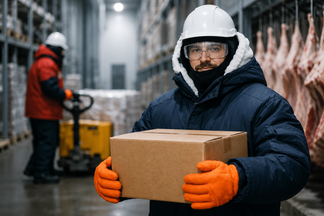
Head and face protection can also be overlooked. In lower-temperature zones, insulated liners, balaclavas, or hoods may be necessary to protect exposed skin, especially during prolonged exposure or loading activity near open freezer doors. Where hard hats are required, compatibility matters. Cold-weather accessories should work with existing head protection, not interfere with it.
Georgia cold storage PPE and compliance expectations
OSHA does not publish one single cold storage uniform list, but employers are still responsible for assessing hazards and providing appropriate PPE. In practice, that means documented selection based on actual exposure and job function, not a casual assumption that winter wear is sufficient.
For regulated environments such as food processing, pharmaceuticals, and contract manufacturing, buyers also need to consider sanitation protocols, contamination controls, and how garments perform under repeated cleaning or replacement cycles. Some products hold up well in rugged warehouse use but are not the best choice in hygiene-sensitive operations.
High-visibility needs may apply as well, particularly around docks, yard interfaces, and powered industrial truck traffic. In those cases, insulated outerwear must still meet visibility requirements instead of forcing workers to layer a vest over bulky freezer gear that was not designed for it.
The strongest programs treat freezer wear as part of the site PPE matrix, not as a separate clothing purchase. That approach improves consistency in training, replenishment, and audit readiness.
Common buying mistakes in cold storage operations
The most common issue is buying for price first and replacement cost later. Lower-cost freezer gear may look acceptable on paper, but if zippers fail, insulation packs down quickly, or gloves lose grip after limited use, the real cost shows up in repeat orders and avoidable worker complaints.
Another mistake is ignoring transition work. Many employees are not in one temperature zone all day. They move from ambient warehouse space to refrigerated staging, then into freezer storage, then back to the dock. PPE has to work across those transitions. Gear that performs in deep freeze but causes overheating during movement may not get worn consistently.
Sizing is another operational issue, not a minor detail. When freezer bibs are too tight over base layers or jackets restrict shoulder movement, workers adapt by leaving garments unfastened or removing them for routine tasks. Good PPE policy fails quickly when fit is poor.
Procurement teams should also watch for overstandardization. Consolidating SKUs can simplify purchasing, but too much simplification can leave key roles underprotected. A facility may be able to standardize outerwear brand or platform while still allowing different glove and boot options by task.
How buyers should evaluate suppliers
Cold storage PPE is easier to manage when the supplier understands industrial use cases, not just apparel categories. Buyers should expect support around product ratings, application fit, standards, and replenishment planning. If a supplier cannot explain the difference between freezer outerwear for intermittent exposure and gear built for extended sub-zero work, that gap usually shows up after rollout.
Bulk purchasing support matters too, especially for multi-site operations or seasonal demand spikes. The ability to source freezer suits, insulated gloves, high-visibility cold-weather gear, and general PPE from one dependable supplier can reduce ordering friction and shorten lead times when replacement cycles hit all at once.
For facilities in Georgia and across the Southeast, fast fulfillment is especially valuable because cold chain operations cannot wait on long backorders. A freezer expansion, staffing increase, or damaged gear event can create urgent PPE needs with little notice.
A supplier with depth in both mainstream safety categories and specialized freezer protection gives buyers more control. That is one reason many industrial teams work with ASA, LLC when they need cold-storage-specific PPE alongside their broader OSHA-oriented safety purchasing.
Building a PPE program workers will actually use
The best Georgia cold storage PPE program is not the one with the longest spec sheet. It is the one workers will wear correctly through a full shift. That takes field input, trial sizing, and a realistic view of how tasks are performed.
Start with the highest-exposure roles and test gear under real operating conditions. Watch for where gloves come off, where jackets stay open, and where workers improvise around discomfort. Those small behaviors usually point to a product mismatch before incident reports do.
A solid program also plans for replacement. Freezer gear takes abuse from abrasion, moisture, compression, and constant use. If the replenishment process is slow or inconsistent, worn-out PPE stays in service longer than it should. That creates risk and undercuts the investment made in the original selection.
Cold storage work does not leave much room for guesswork. When PPE matches the actual task, workers stay protected, operations stay moving, and managers spend less time fixing preventable problems after the shift has already started.