

May 1st 2026
Freezer Suits for Warehouses That Perform
A worker stepping from a 38°F dock into a -10°F freezer can feel the gap immediately. If their outerwear is too light, too stiff, or poorly fitted, productivity drops fast and cold stress risk goes up. That is why freezer suits for warehouses are not just winter apparel. They are job-specific PPE built to protect workers, support movement, and keep operations running in cold storage environments.
For warehouse managers, safety teams, and procurement buyers, the challenge is rarely finding insulated clothing in general. The real issue is choosing gear that holds up to actual freezer conditions, repeated wear, wash cycles, and the pace of industrial work. A freezer suit that looks adequate on paper may fail in the field if the seams leak cold air, the zipper binds with gloves on, or the fit restricts lifting and order picking.
What freezer suits for warehouses need to do
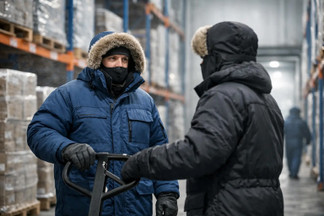
In a warehouse freezer, exposure is rarely static. Workers move between loading areas, refrigerated zones, and deep freeze storage. Some are driving forklifts for long periods. Others are palletizing, stocking, or handling inventory on foot. That means freezer wear has to manage more than temperature rating alone.
A proper freezer suit needs to insulate without creating excessive bulk. It has to help retain body heat while allowing enough mobility for bending, reaching, climbing on and off equipment, and safe material handling. In practical terms, that usually means a combination of insulated jackets or coveralls, reinforced wear zones, storm flaps, knit cuffs, and closures that reduce heat loss at common entry points.
The best-performing options are designed for repeated industrial use. That includes abrasion resistance around knees and elbows, dependable zippers, and fabric that can stand up to warehouse surfaces, pallet contact, and routine handling. If a garment tears early or loses loft after limited use, replacement costs add up quickly.
Temperature rating matters, but so does task type
One of the most common purchasing mistakes is treating all cold environments the same. A freezer suit rated for sub-zero exposure may still be the wrong choice if it does not match the work pattern.
An employee who spends most of a shift in a stationary position, such as equipment operation or monitoring, typically needs more insulation than a worker who is constantly moving and generating body heat. Overdressing active workers can create perspiration issues, which becomes a problem when moisture cools down during slower periods. Underdressing workers in low-movement roles creates a more immediate cold stress concern.
This is where a layered approach often makes sense, even when buying full freezer suits for warehouses. Some operations need heavily insulated coveralls for continuous freezer exposure. Others are better served by insulated bib overalls paired with freezer jackets, allowing crews to adjust based on work zone and task intensity. The right answer depends on shift length, freezer temperature, employee activity level, and frequency of movement between temperature-controlled spaces.
Fit is a safety and performance issue
Poor fit does more than frustrate workers. It can interfere with safe movement, reduce thermal protection, and increase wear damage. If a suit is too tight, insulation gets compressed and loses effectiveness. Tight garments also restrict motion at the shoulders, knees, and waist, which matters when employees are lifting, stepping onto lift equipment, or reaching into racking.
If the suit is too loose, workers may snag on warehouse fixtures or struggle with excess material around hands and feet. Oversized cuffs and legs can create avoidable hazards, especially in active material handling environments.
For buyers outfitting larger crews, sizing consistency is a major operational factor. It helps to standardize around styles with enough room for base layers without forcing employees to size up excessively. Features like elastic waists, adjustable cuffs, and gusseted movement zones often improve comfort without sacrificing protection.
Key design details that separate industrial freezer wear from general cold-weather gear
A warehouse freezer is not the same as outdoor winter work. The environment is colder, more repetitive, and often more demanding in terms of movement and durability. That is why purpose-built industrial freezer suits include details that standard insulated outerwear may not.
Reinforced knees and seat panels are important where workers kneel, climb, or sit on powered equipment. Rib-knit storm cuffs help trap heat and block cold air intrusion at the wrists. High collars and insulated hoods can improve protection in lower-temperature zones, although the best combination depends on whether head protection or other PPE must also be worn.
Heavy-duty front closures matter more than many buyers expect. In freezer settings, workers may be zipping and unzipping garments while wearing thermal gloves. A zipper that catches, separates, or becomes difficult to operate under cold conditions turns into a daily complaint and a productivity issue.
Visibility can also be a factor. In some facilities, insulated outerwear needs to work alongside ANSI high-visibility requirements or internal visibility policies for traffic areas around docks and forklift routes. In those cases, selection should account for both cold protection and site-specific visibility expectations.
Compliance does not stop at warmth
Freezer suits are primarily selected for thermal protection, but warehouse buyers still need to think in terms of the full PPE program. The right garment should support safe work practices, not create conflicts with other required equipment.
That includes compatibility with hard hats, gloves, hearing protection, and safety footwear. It also includes practical concerns such as whether the garment allows workers to maintain dexterity, keep closures secured, and move safely during emergency egress.
OSHA does not prescribe one universal freezer suit specification for all warehouses, but employers are responsible for assessing workplace hazards and providing suitable protective equipment. In cold-storage settings, that means evaluating temperature exposure, duration, physical demands, and any secondary hazards tied to the job. Procurement teams should view freezer wear as part of a documented safety strategy, not an isolated apparel purchase.
Durability affects total cost more than unit price
A lower upfront price can look attractive during purchasing, especially for larger teams, but freezer wear should be evaluated over service life. If the garment fails early, loses insulation, or drives worker complaints that lead to inconsistent use, the apparent savings disappear.
Cost should be measured against replacement frequency, worker acceptance, and downtime risk. A suit that stays in service longer and performs consistently under real warehouse conditions often delivers a better return than a cheaper option that needs frequent replacement.
This matters even more in multi-site operations. Standardizing on dependable freezer suits can simplify ordering, reduce fit issues across locations, and make replenishment more predictable. For procurement teams balancing budget control with operational continuity, those factors are usually more important than chasing the lowest line-item price.
How to evaluate freezer suits before a larger purchase
For facilities with significant freezer exposure, wear testing is worth the time. A small pilot order can reveal issues that product specs alone may not show. Workers will identify whether the suit rides up while seated, whether sleeve openings work well with gloves, and whether the insulation level matches actual activity.
Supervisors should also pay attention to signs of misuse that signal a poor product fit for the application. If employees leave jackets unzipped, avoid wearing the garment, or switch back to older gear, there is usually a reason. Comfort, movement, and ease of use directly affect compliance in the field.
It also helps to review laundering and maintenance requirements before standardizing. Some insulated garments perform well initially but degrade faster under frequent industrial cleaning. Others maintain their structure better over time, which supports both protection and cost control.
Choosing a supplier for warehouse freezer wear
The product matters, but so does the supply partner behind it. Warehouse and cold-storage buyers often need size runs, repeat orders, and consistent availability across seasons. If replenishment is slow or sizing is unreliable, operations feel it quickly.
A supplier focused on industrial PPE and freezer protection is generally better equipped to support these demands than a general apparel seller. The right partner can help buyers compare insulation levels, garment styles, and use cases based on actual work conditions rather than broad retail-style descriptions. For teams managing compliance, uptime, and budget at the same time, that support is not a luxury. It is part of buying correctly.
ASA, LLC has built its cold-storage offering around that reality, serving buyers who need freezer-rated protection alongside the rest of their workplace PPE program.
When freezer suits for warehouses are the right choice
Not every cold-storage operation needs a full one-piece suit for every role. Some crews are better protected with separate insulated jackets and bibs. Others benefit from full-body coverage because it reduces heat loss, simplifies uniform issue, and holds up better for continuous exposure.
The right decision comes down to the environment, the task, and the workforce using the gear. Buyers who treat freezer wear as a technical equipment category rather than a clothing purchase usually make better long-term decisions. When the suit matches the temperature, movement, and demands of the warehouse, crews stay safer, work more comfortably, and spend less time fighting their gear.