


Jun 25th 2026
Freezer Suit Buyer Review for Cold Storage PPE
A freezer suit buyer review should start where most purchasing mistakes happen - assuming all insulated suits perform the same once the temperature drops below zero. On paper, many products look similar. In the field, the difference shows up fast in worker mobility, seam wear, cold penetration, replacement cycles, and whether your team keeps moving product without unnecessary exposure risk.
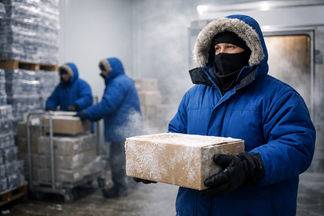
For safety managers, warehouse leaders, and procurement teams, a freezer suit is not just winter apparel. It is task-specific PPE for controlled cold environments, often tied directly to productivity, retention, and injury prevention. If your crew works in blast freezers, cold storage docks, food processing corridors, or sub-zero transport zones, the right suit has to balance thermal protection with movement, visibility, and service life.
What a freezer suit buyer review should actually evaluate
A useful freezer suit buyer review is not a style opinion. It should assess how the garment performs under real operating conditions. That means looking beyond temperature claims on a product page and asking how the suit behaves across a full shift, how quickly it degrades in high-abrasion areas, and whether it supports the actual motion patterns of your workforce.
Insulation is the first checkpoint, but it is not the only one. A heavily insulated suit may offer strong cold protection while slowing workers who climb in and out of forklifts, reach overhead, or move through narrow aisles. On the other hand, a lighter suit may improve mobility but underperform during extended exposure at 0°F or below. The right choice depends on exposure duration, work intensity, and whether employees rotate in and out of cold zones.
Outer shell durability matters just as much. In industrial freezer environments, garments are constantly exposed to pallet edges, conveyor contact, rack abrasion, lift equipment friction, and repeated laundering. If the shell tears easily or the stitching fails under strain, the initial price advantage disappears quickly.
Closures and openings deserve more attention than they usually get. Zippers should be easy to operate with gloves on, storm flaps should reduce cold intrusion, and cuffs and ankles should help seal out air without restricting movement. These details affect comfort, but they also affect compliance. Workers are more likely to wear the suit correctly when it is practical to use.
Freezer suit buyer review: the features that separate average from dependable
The best freezer suits are usually the ones that solve operational problems before they become replacement orders. In most facilities, dependable performance comes down to four factors: thermal consistency, ergonomic fit, high-wear reinforcement, and sizing accuracy.
Thermal consistency means the suit protects not just at first wear, but after repeated use. Some garments lose loft, compress at pressure points, or develop cold spots around knees, elbows, and seat panels. Buyers should look for construction that holds up under repeated motion and compression rather than relying only on claimed temperature ratings.
Ergonomic fit is often overlooked during procurement, especially in bulk ordering. A suit that is too tight restricts movement and can reduce insulating air space. A suit that is too loose can snag on equipment or create frustration during active tasks. The best fit allows layering without turning routine movement into fatigue. For teams with mixed job functions, one suit style may not serve every role equally well.
Reinforcement in high-wear zones is a strong indicator of long-term value. Knees, elbows, seat areas, and pocket edges typically fail first. If your operation includes repetitive kneeling, dock work, or equipment operation, these stress points should factor into the buying decision as much as insulation weight.
Sizing accuracy has direct budget impact. Returns, reorders, and worker complaints often come from generic sizing assumptions. In industrial settings, buyers need to account for base layers, task movement, and gender-specific fit where appropriate. A lower-cost suit with inconsistent sizing can create more disruption than a higher-cost option that fits correctly the first time.
Matching the freezer suit to the work environment
Not every cold environment places the same demand on freezer wear. That is where many reviews fall short. They treat all low-temperature applications as identical when the exposure pattern is what really drives the buying decision.
For intermittent freezer entry, a lighter insulated suit may be the better operational choice. Workers moving in and out of cold zones can overheat in overbuilt gear, especially when loading, picking, or scanning product at a fast pace. In that setting, comfort and mobility can improve wear compliance and reduce unnecessary fatigue.
For long-duration exposure in deep-freeze storage, thermal protection becomes the top priority. Here, buyers should place more weight on insulation performance, closure integrity, and compatibility with thermal gloves, head protection, and insulated footwear. If the suit leaves gaps at the wrists, neck, or ankles, workers will feel it quickly.
Food processing environments add another layer. Buyers may need garments that hold up to more frequent cleaning, resist moisture intrusion, and maintain performance in areas where condensation, washdown practices, or temperature transitions are routine. In those cases, the most durable freezer suit is not always the one with the thickest insulation. It is the one designed for the sanitation and wear conditions of the facility.
Cost per wear matters more than unit price
Procurement teams are right to compare pricing, but freezer wear should be judged on cost per wear, not shelf price alone. A suit that lasts two seasons with fewer failures may outperform a lower-cost product that needs early replacement, creates downtime, or leads to duplicate orders because crews reject the fit.
A good freezer suit buyer review should ask a few practical questions. How many wash cycles can the garment tolerate before performance drops? Do zippers remain reliable in cold conditions? Are replacement rates concentrated in one wear area? Does the suit maintain acceptable performance across different body types and job roles?
These questions matter in multi-site operations where standardization is important. If one model works well across multiple facilities, ordering becomes simpler, sizing data becomes more reliable, and inventory management improves. That consistency can reduce administrative friction as much as it reduces product waste.
Compliance, visibility, and layered PPE compatibility
Freezer suits do not exist in isolation. In many facilities, they must work alongside high-visibility requirements, head protection, gloves, and slip-resistant footwear. That means buyers should evaluate the full PPE system, not just the suit by itself.
If your workforce operates around powered industrial trucks or low-light loading zones, visibility features may be necessary. If hard hats or bump caps are required, the collar and hood configuration should not interfere with proper wear. If workers need cut protection, chemical resistance, or food-safe glove systems in adjacent tasks, sleeve design and cuff access become more important.
This is where experienced industrial suppliers can help prevent mismatched purchases. ASA, LLC has built its cold-storage offering around the reality that freezer protection needs to work with the rest of the safety program, not around it.
Common buying mistakes that lead to poor freezer suit performance
The most common error is buying by temperature rating alone. Temperature claims can be useful, but they do not account for workload, wind exposure at docks, moisture, or time spent stationary versus moving. A picker working continuously and a supervisor standing for inspection rounds may need different levels of insulation.
Another common mistake is underestimating wear environment. Cold storage is hard on garments. Abrasion, mechanical contact, and repeated laundering can shorten lifespan faster than buyers expect. If the operation is tough on gear, durability should move up the decision criteria.
The third issue is skipping worker feedback. End users often identify fit, heat retention, zipper function, and mobility problems early. A short wear trial can reveal more than a specification sheet, especially when outfitting larger teams.
How to make a better freezer suit buying decision
Start with task mapping, not product mapping. Identify who works in the cold, for how long, at what activity level, and with what other PPE. Then compare suit options against those use patterns. This avoids overspending on unnecessary insulation in some roles while under-protecting others.
Next, review construction details closely. Look at seam quality, closure design, reinforcement zones, and shell durability. Ask how the suit performs after repeated use, not just when new. For bulk purchases, confirm sizing support and availability so replenishment is not a problem three months later.
Finally, think operationally. The best freezer suit is the one your team will wear correctly, that purchasing can reorder without headaches, and that holds up long enough to justify its cost. That is a more useful standard than chasing the lowest unit price or the highest insulation claim.
When you treat freezer wear as a performance and compliance purchase instead of a basic apparel order, the buying decision gets clearer. The right suit protects workers, supports productivity, and removes one more point of failure from a demanding environment.