

Jun 22nd 2026
Freezer PPE Program Example That Works
A freezer incident rarely starts with a dramatic failure. More often, it starts with a worker taking a quick trip into a -10°F zone with the wrong gloves, a worn jacket zipper, or no clear rule on how long they should stay inside. That is why a strong freezer PPE program example matters - not as paperwork for a binder, but as a working system that keeps people protected and production moving.
For safety managers and operations leaders, the challenge is not just buying insulated gear. It is matching PPE to actual freezer tasks, exposure times, traffic patterns, sanitation requirements, and replacement cycles. A useful program also needs to hold up during audits and make sense to supervisors on every shift.
What a freezer PPE program example should include
A practical freezer PPE program starts with hazard assessment. In cold storage, that means more than ambient temperature. You need to account for wind chill from fans, contact cold from metal surfaces, moisture, time spent in and out of freezer zones, and whether employees are lifting, driving equipment, or standing in place. A selector who picks orders for 20 minutes at a time has a different exposure profile than a technician working on a freezer evaporator for an hour.
The written program should define freezer areas by temperature band and task type. Many facilities separate coolers, refrigerated docks, and deep-freeze storage, then assign PPE by zone. That avoids the common problem of crews wearing light cold-weather gear in spaces that require full freezer-rated protection. It also keeps purchasing tighter, since not every employee needs the same kit.
At minimum, the program should name required PPE categories, issue criteria, fit expectations, cleaning and storage rules, inspection frequency, employee training, and replacement triggers. It should also identify who is responsible for enforcement. If ownership is vague, compliance usually becomes inconsistent by shift, department, or location.
Sample freezer PPE program structure
The best freezer PPE program example is one your supervisors can actually use. In practice, most strong programs follow a simple structure.
1. Purpose and scope
Start by stating that the program protects employees who work in refrigerated and freezer environments from cold stress, reduced dexterity, slip hazards, and skin exposure. Define the departments covered, such as warehousing, food processing, maintenance, shipping, and sanitation. If contractors enter freezer spaces, note whether they must follow the same PPE rules or provide equivalent protection.
2. Hazard assessment and temperature zones
Document each area by operating temperature and exposure pattern. For example, a refrigerated dock at 35°F with frequent door openings creates different risks than a static blast freezer at -20°F. This section should also note work intensity. High movement generates body heat, but it can also lead to sweat buildup, which becomes a cold hazard when the worker stops.
A good program does not treat all freezer work the same. It distinguishes between routine access, prolonged exposure, emergency response, and maintenance shutdowns. That matters because the PPE that works for a lift truck operator may not be enough for an employee kneeling on a cold floor to repair equipment.
3. Required freezer PPE by task
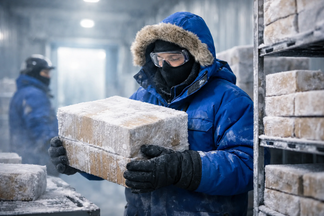
This is the section supervisors reference most, so keep it direct. For routine entry into sub-zero areas, many programs require an insulated freezer coat or suit, insulated bib overalls or pants, thermal gloves rated for freezer use, insulated head protection or a thermal liner, and slip-resistant insulated footwear. If there is overhead hazard, hard hat compatibility needs to be addressed. If there is food production exposure, gear may also need to meet sanitation and contamination-control requirements.
Hand protection deserves extra attention. In many facilities, workers need warmth and grip at the same time. Bulky gloves may protect from cold but reduce handling performance. Lighter thermal gloves may improve picking speed but fail during longer exposures. The right choice depends on whether the task involves scanning, driving, pallet handling, or contact with frozen product.
Face protection can also vary. In some freezer rooms, a thermal cap is enough. In others, especially where wind from fans is constant or loading docks create severe drafts, face and neck coverage may be necessary to prevent exposed skin from becoming a risk point.
4. Wear time, warm-up, and exposure controls
PPE does not replace work practice controls. A sound freezer PPE program example sets limits for extended exposure and gives supervisors authority to rotate employees or require warm-up breaks. This is especially important for new hires, temporary labor, and workers returning after time away from cold environments.
If your operation runs mixed-temperature workflows, transitions should be part of the program. Employees moving between hot production spaces and freezers can sweat heavily, which reduces insulation effectiveness. Programs should address layering, change-out gear, and dry storage for spare garments.
5. Training and employee acknowledgment
Training should cover more than how to wear the gear. Employees need to understand cold stress signs, the difference between discomfort and hazard, when to report damaged insulation, and why cotton base layers are often a poor choice in freezer work. Supervisors should know how to spot reduced dexterity, slowed reaction time, and poor judgment caused by cold exposure.
Training records matter because cold-related injuries are often preventable but difficult to defend if procedures were never documented. A signed acknowledgment that employees received, understood, and were fitted for required PPE adds accountability without overcomplicating the process.
6. Inspection, cleaning, and replacement
Insulated gear fails gradually. Compressed insulation, torn seams, broken closures, wet lining, and worn glove palms all reduce protection before the item looks completely unusable. The program should require pre-use visual checks by employees and scheduled reviews by supervision or safety staff.
Cleaning rules need to fit the environment. In food and pharmaceutical operations, hygiene standards may require more frequent cleaning and controlled storage. That can shorten garment life. Procurement teams should expect that reality rather than buying on initial price alone.
Replacement criteria should be specific. Saying "replace as needed" is not enough. State that PPE must be replaced when insulation is compromised, closures no longer seal properly, thermal liners remain damp, footwear loses tread, or the item no longer fits the employee correctly.
Common mistakes when using a freezer PPE program example
The most common failure is copying a generic cold-weather policy and calling it done. Freezer work is not the same as winter outdoor work. It often involves constant transitions, wet floors, powered equipment, and repetitive handling tasks in controlled sub-zero spaces. The PPE has to support mobility and productivity, not just temperature protection.
Another mistake is issuing one standard kit to every worker. That seems efficient, but it usually leads to under-protection for some tasks and overspending for others. A layered issue model often works better. Employees can receive core freezer wear for their role, then task-specific items for deeper exposure or maintenance work.
Facilities also underestimate sizing and fit. If bibs bind when employees climb on and off equipment, or gloves are too bulky to operate scanners, workers will work around the PPE. Noncompliance often starts with poor usability, not poor attitude.
How to adapt this freezer PPE program example to your site
Start with your actual freezer map, not a catalog. Identify who enters each zone, for how long, and what they touch. Then build PPE requirements around exposure time, task movement, sanitation needs, and any overlapping hazards such as impact, slips, or high-visibility needs near traffic lanes.
Next, involve supervisors and a small group of end users in wear testing. A coat that looks right on paper may fail when a pallet jack operator has to turn repeatedly, or when a picker needs glove dexterity for labels and screens. Short field trials usually reveal more than a spec sheet.
Finally, connect the program to replenishment. Freezer PPE is not a one-time rollout. If replacement lead times are long or sizing is inconsistent, your program will break down during peak season. Buyers should stock core items with enough depth to support new hires, damaged gear, and seasonal volume increases. This is where a specialized supplier can help, especially if your operation needs both standard OSHA-oriented PPE and freezer-rated garments from one source. ASA, LLC supports that kind of procurement planning for industrial and institutional buyers who cannot afford gaps in coverage.
A working standard beats a perfect document
The best freezer PPE program is the one your team follows on a busy Tuesday, not the one that reads well in a policy review. If the gear matches the task, the rules are clear by zone, and replacement happens before failures become incidents, the program is doing its job. Build it to fit your operation, keep it enforceable, and let the people who wear the gear help prove whether it works.