

Jun 29th 2026
Food Processing PPE Guide for Safer Plants
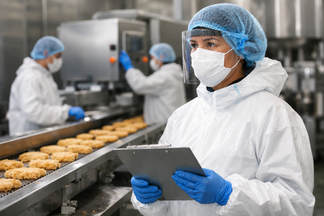
A worker moving from raw receiving into washdown, then into a chilled packaging room, does not face one hazard. They face a chain of hazards that changes by task, temperature, and sanitation requirement. That is why a solid food processing ppe guide has to do more than list gloves, aprons, and boots. It has to help safety managers, plant supervisors, and procurement teams match protection to the real conditions on the floor.
Food plants are demanding environments because protection has to support both worker safety and product integrity. PPE that performs well in general manufacturing may fail in a food facility if it sheds, absorbs moisture, breaks down under washdown chemicals, or creates sanitation issues. The right choice protects the employee without creating a new risk for the line.
What makes food processing PPE different
Food processing combines several hazard categories in the same facility. Workers may encounter sharp tools, hot surfaces, steam, wet walking surfaces, chemical exposure during sanitation, repetitive tasks, and cold environments in coolers or freezers. In some operations, hearing hazards and splash hazards are also routine. A one-size-fits-all PPE program usually leads to overprotection in one area, underprotection in another, and unnecessary replacement costs across the board.
The better approach is task-based selection. A deboning station needs different hand protection than a bakery mixing area. A sanitation crew working with concentrated cleaners needs different clothing than a packaging operator. A freezer picker needs insulation and dexterity, while a washdown team may need waterproof gear that stands up to repeated chemical exposure. The hazard drives the PPE, not the department name alone.
Food processing PPE guide by hazard category
A practical food processing PPE guide starts with the hazards your teams actually face, then works outward to product selection, wear compliance, and replacement cycles.
Hand protection
Gloves are one of the most complex PPE categories in food plants because they affect safety, comfort, productivity, and contamination control. Cut protection matters where blades, slicers, trimming tools, and sharp-edged packaging are present. In those cases, the cut level should reflect the actual exposure, not just a general preference for the highest rating available. Higher cut resistance can reduce dexterity, and that matters on fast lines.
In wet or oily conditions, grip becomes just as important as cut resistance. A glove that meets the cut requirement but becomes slick during production can increase both injury risk and handling errors. For chemical sanitation tasks, hand protection needs to be chosen for chemical compatibility, cuff length, and breakthrough time. A disposable glove used on the line may not be appropriate for concentrated cleaning agents in sanitation.
Cold processing adds another trade-off. Insulated gloves can help protect against cold stress, but bulkier gloves may interfere with fine motor work. In freezer areas, look for gloves built to handle low temperatures while preserving enough movement for scanning, picking, and routine equipment handling.
Protective clothing and aprons
Body protection in food processing often needs to do two things at once: protect the worker from splash, cuts, cold, or chemicals, and avoid introducing contamination risks into the process. Aprons, sleeve protection, freezer jackets, coveralls, and chemical-resistant outerwear all have a place, but not in every zone.
In wet processing areas, waterproof aprons and sleeve covers can help keep workers dry and reduce distraction and discomfort over a full shift. For sanitation, chemical-resistant garments should be matched to the specific agents in use, especially where foaming chemicals or strong disinfectants are applied overhead or under pressure. In cold storage or food distribution areas connected to the plant, insulated outerwear should be selected by actual ambient temperature and exposure duration, not just by a general label such as freezer wear.
This is where many buyers run into problems. Lightweight cold gear may be fine for quick entries into a cooler but inadequate for sustained work in sub-zero storage. On the other hand, heavy insulation in a moderately chilled area can increase sweat buildup and discomfort, which can lower compliance over time.
Foot protection
Slip hazards are constant in many food facilities. Water, oils, fats, ingredients, and washdown residues all affect walking surfaces. Slip-resistant footwear is not optional in those settings, but sole design should be evaluated against the actual floor condition. A boot that performs well on one surface may not perform the same on smooth coated flooring, tile, or textured concrete.
Chemical exposure also matters. If the footwear material degrades under routine sanitation chemicals, service life drops quickly and protection becomes less reliable. Waterproof construction is often necessary, but comfort still matters for teams standing for long periods. If boots are too heavy, too hot, or difficult to clean, wear compliance usually suffers.
Where impact or compression hazards exist, toe protection may be required. The key is to avoid adding features that are not needed in a given role, because unnecessary weight and stiffness can create fatigue over long shifts.
Eye, face, and hearing protection
Splash hazards, flying particles from maintenance work, compressed air use, and chemical handling all affect eye and face protection needs. In food environments, eyewear should be easy to clean, comfortable enough for all-day wear, and compatible with hair coverings and other required gear. Fogging is a common failure point, especially when employees move between temperature-controlled areas.
Face shields may be needed for certain sanitation or chemical transfer tasks, but they are not a replacement for primary eye protection when impact or splash risk is present. Hearing protection is another area where selection needs to reflect actual exposure and communication needs. Overprotecting can create its own risk if workers cannot hear alarms, equipment changes, or instructions on the floor.
Compliance is not just a paperwork issue
For food plants, PPE selection sits at the intersection of OSHA requirements, hazard assessment, sanitation controls, and plant operating procedures. Buyers and safety leaders need gear that meets the relevant performance standard, but certification alone does not guarantee success in use. The product also has to fit the environment, the shift length, and the workflow.
A common issue is treating PPE as a purchasing checkbox instead of part of the operating system. If gloves tear too quickly, if eyewear fogs, or if freezer gear slows movement, workers will find ways around it. That creates exposure, inconsistency, and avoidable replacement costs. Good PPE programs reduce friction. They make the safe option the workable option.
How to evaluate PPE for a food plant
Start with a hazard assessment tied to the actual task. Not every packaging role needs the same hand protection, and not every cold area requires the same insulation level. Separate your evaluation by process area, maintenance activity, sanitation function, and temperature zone. Then look at how long the employee is exposed, what else they need to wear, and whether the PPE can be cleaned or replaced efficiently.
Wear trials are worth the effort, especially for gloves, boots, and cold-weather gear. On paper, two products may look similar. On the floor, one may last longer, fit a wider portion of the team, or create fewer productivity complaints. Procurement teams should also pay close attention to replenishment reliability. A strong spec loses value fast if the item is frequently backordered or inconsistent across shipments.
If your operation includes chilled or freezer-connected areas, cold-rated PPE deserves special scrutiny. Freezer wear has to support thermal protection without making workers clumsy or overly fatigued. Since 2003, ASA, LLC has supported industrial buyers who need that balance, especially where standard PPE programs do not fully address cold-storage conditions.
Common mistakes buyers make
The first is buying for the broad facility instead of the task. That usually leads to excess spend and poor worker acceptance. The second is ignoring comfort and fit, which often shows up later as non-compliance. The third is failing to account for sanitation chemistry, washdown frequency, or cold exposure when estimating service life.
Another frequent issue is separating PPE decisions from operations input. Safety, QA, sanitation, and line supervision may all see a different part of the problem. Better decisions happen when those groups compare notes before a large order is placed. That matters even more for multi-site buyers trying to standardize PPE across facilities with different layouts, temperatures, and product types.
Building a better food processing PPE program
The strongest programs are specific, documented, and easy to maintain. They define what is worn by task, not just by department. They include clear replacement triggers. They account for seasonal temperature swings, turnover, and sizing depth. And they make room for revision when a new process, chemical, or production target changes the risk profile.
For procurement teams, the goal is not just to source compliant products. It is to build a supply plan that keeps the right gear available without carrying unnecessary inventory. That means balancing standardization with enough flexibility to support real differences between sanitation crews, line workers, maintenance staff, and cold-area personnel.
When PPE fits the hazard and the work, it does more than satisfy a requirement. It helps keep shifts moving, reduces avoidable injuries, and gives your team one less point of failure in a tightly managed operation. That is usually where the best PPE decisions prove their value.