

Posted by Freddy Pineda on May 5th 2026
Best Police Rain Jackets for Duty Use
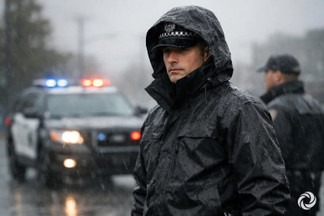
A soaked outer layer can turn a routine call, traffic detail, or perimeter assignment into a cold, distracting shift fast. When departments evaluate the best police rain jackets, the real question is not just who makes one that keeps water out. It is which jacket supports mobility, identification, gear access, and long-hour wear without creating new problems in the field.
For law enforcement buyers, rain gear is part of operational readiness. Officers may move from vehicle patrol to foot pursuit, scene control, roadway response, or overnight watch in the same shift. A jacket that looks good in a catalog but fails under body armor, blocks access to duty equipment, or traps heat can become a liability. That is why the buying standard should be performance first, with procurement efficiency and service life close behind.
What separates the best police rain jackets from standard rainwear
A police rain jacket has to do more than repel water. It needs to work around a duty belt, fit over base layers or armor, maintain a professional appearance, and stay functional through repeated deployment. Standard commercial rain shells often miss those requirements because they are built for commuters or general outdoor use, not uniformed response.
The best police rain jackets usually balance four factors at once: waterproof protection, breathability, visibility where needed, and compatibility with law enforcement gear. If one of those factors is weak, the jacket may still work for light use, but not for broad department issue.
Waterproofing is the obvious requirement, but fabric construction matters. Coated polyester can be cost-effective and fully serviceable for occasional use, especially for reserve units or vehicle kits. For daily wear in prolonged rain, higher-grade waterproof breathable laminates generally hold up better and reduce internal moisture buildup. That trade-off matters because a jacket that keeps rain out but traps sweat can leave officers just as uncomfortable and distracted.
Core features to look for in police rain jackets
Waterproof construction and seam sealing
Departments should start with true waterproof construction, not water resistance. Taped or sealed seams are critical. Without them, water often enters at stitch points first, especially across shoulders, sleeves, and pocket lines. A storm flap over the front closure also helps protect the zipper during wind-driven rain.
Fabric weight deserves attention too. Heavier materials may improve abrasion resistance and long-term wear, but they can also add bulk and restrict movement. Lighter shells are easier to store and faster to deploy, though they may not stand up as well to hard use if officers regularly work around fencing, concrete, roadside debris, or equipment edges.
Breathability and heat management
Breathability is often undervalued during purchasing because it is harder to assess on paper than waterproof ratings. But for officers working active scenes, directing traffic, or moving in and out of patrol vehicles, trapped heat becomes a real issue. Pit zips, vented back panels, and breathable membrane construction can make a meaningful difference.
This is one of the clearest it-depends decisions in the category. If a department needs a compact shell for short-duration weather events, basic waterproof gear may be enough. If officers are wearing the jacket for hours at a time across variable conditions, better heat management is worth the higher unit cost.
Access to duty gear
A rain jacket that blocks access to radios, body-worn equipment, or the duty belt creates field frustration immediately. Side zippers, pass-through openings, and cut length all affect usability. Longer jackets provide better rain coverage when standing post, but if they interfere with belt-mounted gear or seated movement in a patrol vehicle, that extra length can work against the officer.
The best fit is often a mid-length cut that protects the torso without limiting stride or access. For specialized units, buyers may need different configurations rather than a one-jacket-fits-all approach.
Identification and professional appearance
Police rain gear needs to preserve clear identification in poor visibility. Badge tabs, epaulets, mic tabs, and attachment points for patches or insignia can all matter depending on departmental standards. Dark uniform colors remain common, but visibility should still be part of the evaluation, especially for roadway response, traffic control, and incident scenes.
High-visibility accents or ANSI-compliant outerwear may be appropriate for some assignments, but not every patrol function. For mixed-use operations, agencies sometimes separate general patrol rain jackets from traffic or emergency response outerwear. That approach can improve both compliance and officer acceptance.
Choosing the right jacket by duty environment
Patrol and general response
For routine patrol, the best police rain jackets are typically lightweight to midweight waterproof shells with enough room for layering. Officers need weather protection, movement, and a clean uniform appearance. A shell that can be packed into a vehicle and deployed quickly is often more practical than a bulky all-in-one system.
General patrol buyers should focus on zipper durability, cuff adjustment, hood design, and compatibility with armor and standard uniform layers. A removable hood can help departments balance weather coverage with visibility and profile requirements.
Traffic and roadway operations
Officers working roadsides have a different risk profile. Here, rain protection alone is not enough. Visibility and compliance become much more important, especially in low light or heavy weather. Some agencies need outerwear that supports high-visibility requirements for specific tasks or assignments.
This is where procurement teams should think in terms of role-based issue. The best police rain jackets for roadway work may look different from those used for standard patrol because conspicuity can outweigh the preference for a traditional uniform appearance.
Tactical or specialized assignments
Specialized teams often need quieter fabrics, reduced bulk, and greater range of motion. Oversized storm shells can interfere with movement, snag more easily, and create unnecessary heat stress during active operations. In those cases, lower-profile waterproof layers may be the better choice, even if they sacrifice some extended-wear comfort in static conditions.
No single jacket serves every law enforcement function equally well. That is why agencies that buy by assignment instead of by general category often get better field performance and fewer replacement complaints.
Sizing, layering, and wear over armor
Fit issues are one of the biggest reasons rain gear underperforms. If a jacket is sized like standard uniform outerwear but expected to go over soft armor and thermal layers, officers may lose shoulder mobility and closure range. If it is oversized to compensate, it may bunch at the waist, snag on gear, or flap excessively in wind.
The most practical approach is to test fit samples over actual duty configuration. That means the officer wears normal uniform components, armor, and any seasonal layers likely to be used with the jacket. Procurement teams that skip this step often end up with high return rates or gear that stays in trunk storage instead of being worn.
For colder regions or multi-season use, layering strategy matters more than insulation built into the rain jacket. A shell system usually gives departments better flexibility than a heavily insulated waterproof jacket, especially when weather changes across shifts or regions.
Durability and replacement cycle considerations
Rain jackets may not seem like a high-abuse category until they are issued across a fleet of active users. Repeated on-off use, vehicle entry, radio attachment, laundering, and exposure to road grime all shorten service life. Departments should evaluate reinforcement in high-wear areas and ask whether replacement is likely to come from fabric wet-out, zipper failure, seam breakdown, or appearance standards.
Cost per unit matters, but cost per usable season often matters more. A lower-cost jacket can make sense for backup issue, occasional use, or emergency stock. For primary field wear, paying more for stronger construction is often justified if it reduces replacement frequency and officer dissatisfaction.
Experienced safety and procurement teams usually look beyond the product description and ask a simpler question: will this jacket still perform after repeated field use, cleaning, and storage cycles?
Procurement tips for agencies and institutional buyers
When comparing the best police rain jackets, side-by-side spec review is useful, but field testing is better. Sample wear trials with a small officer group can reveal issues that product sheets do not capture, including noise, cuff failure, poor pocket placement, or restricted mobility in vehicle transitions.
It also helps to standardize your evaluation criteria before reviewing products. Waterproof performance, seam construction, identification features, duty gear access, visibility needs, sizing range, and expected replacement cycle should all be scored against actual use conditions. That makes vendor comparison more defensible and helps support purchasing decisions for command staff or public-sector procurement review.
For organizations managing broader protective apparel needs, working with a supplier that understands both compliance-driven outerwear and operational use can reduce sourcing friction. ASA, LLC supports professional buyers who need dependable weather protection alongside other job-specific PPE, especially where performance and readiness matter more than retail-style features.
The right rain jacket is the one officers will actually wear when conditions turn. If it keeps water out, works with duty gear, and holds up through real use, it stops being an accessory and becomes part of a dependable field uniform.