

May 3rd 2026
ANSI Hi Vis Apparel Classes Explained
A crew member stepping out of a lift truck at dawn does not need a brighter vest. They need the right class of visibility for the traffic speed, task demands, background clutter, and weather on that site. That is where ANSI hi vis apparel classes matter. The class tells you how much visible material and reflective coverage the garment must provide, which directly affects whether a worker can be seen soon enough to avoid a strike-by incident.
For safety managers and buyers, this is not a paperwork detail. It affects OSHA alignment, bid specs, site access, and whether a crew is actually protected during low-light or high-traffic work. The challenge is that many teams still treat high-visibility gear as a single category when the risk level can vary sharply between a warehouse yard, a road crew, and an emergency response scene.
What ANSI hi vis apparel classes actually mean
ANSI/ISEA high-visibility apparel standards group garments by performance class. In practical terms, the class defines the minimum amount of fluorescent background material and retroreflective striping required on the garment. Higher classes provide more conspicuity and are intended for higher-risk environments.
The three classes most buyers deal with are Class 1, Class 2, and Class 3. There is also a separate designation for high-visibility pants, bibs, and shorts called supplemental Class E. When a Class E lower-body garment is worn with a Class 2 top, the combination can meet Class 3 requirements. That matters for crews that need more coverage without switching to a full jacket year-round.
The standard is useful because it gives procurement teams a consistent way to match garment design to exposure level. It is not the only factor in selection, though. Garment type, season, worker movement, and jobsite conditions still need to be considered.
ANSI hi vis apparel classes by risk level
Class 1
Class 1 is intended for workers in low-impact environments where traffic is separated, moving slowly, and the worker's full attention is not divided by complex tasks. Think parking attendants in controlled areas, warehouse personnel in low-speed internal traffic zones, or workers who are clearly set apart from public roadway exposure.
This is the lightest level of conspicuity. It can be appropriate indoors or on private property where vehicle speeds are limited and sight lines are clear. It is usually not the right choice for roadside work, utility work near traffic, or active construction zones with mixed equipment movement.
Class 2
Class 2 is the most common requirement across industrial and municipal operations. It is designed for workers exposed to traffic, mobile equipment, or poor visibility conditions where greater visibility is needed than Class 1 provides. This often includes survey crews, crossing guards, airport ground personnel, utility teams, and construction workers not requiring the highest level of coverage.
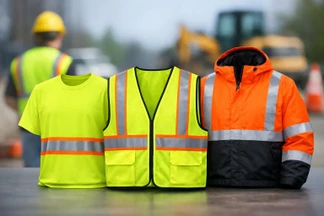
For many employers, Class 2 is the baseline because it fits a broad range of tasks without being as bulky as heavier garments. Vests, shirts, and lightweight jackets often fall into this category. The trade-off is that Class 2 can stop being enough when work shifts to night operations, heavy weather, or tasks that place workers close to fast-moving traffic.
Class 3
Class 3 offers the highest level of visibility coverage under the standard. It is intended for workers facing the most serious visibility hazards, including high-speed traffic exposure, complex backgrounds, low-light conditions, and tasks requiring the worker's attention to be focused elsewhere.
Road construction, emergency response, utility restoration, and nighttime traffic control commonly call for Class 3 garments. Sleeves with reflective material and increased body coverage help drivers recognize the worker as a person at a greater distance. That extra recognition time can be critical where stopping distance is limited.
Class E
Class E applies to high-visibility lower-body garments such as pants, overalls, bibs, and gaiters. On their own, these are supplemental items rather than stand-alone classed garments. Their value is in expanding total visible area, especially in rain, winter, and low-angle lighting when lower-body movement can help draw attention.
In cold-storage yards, loading docks, and winter roadway work, lower-body visibility can be the difference between a worker blending into the environment and standing out clearly. This is one reason layered visibility systems are often more effective than a vest-only approach.
How to choose the right ANSI hi vis apparel classes
Start with exposure, not garment preference. The right question is not whether your team likes vests or jackets. The right question is what kind of moving hazard they face, at what speed, in what lighting, and against what visual background.
If workers are in a controlled warehouse with low-speed forklift traffic and clear pedestrian lanes, Class 1 may be acceptable in some operations. If they move between dock areas, trailer yards, and exterior traffic lanes, Class 2 is more realistic. If they work near roadways, in bad weather, at night, or around fast-moving vehicles, Class 3 should be the default starting point.
The environment also changes the answer. A fluorescent vest that works well in daylight can be less effective in rain, fog, or snow. A bright shirt can be compliant but still inadequate if it is covered by a dark outer layer during cold weather. Buyers in freezer environments or outdoor winter operations need to check that the outermost garment maintains the required visibility class.
Task load matters too. Workers climbing, signaling, hooking loads, or directing traffic are not just standing in view. They are moving, turning, bending, and often focused on another hazard. Higher class garments help preserve visibility through those changing body positions.
Common purchasing mistakes
One of the most common errors is buying to the minimum site rule instead of the actual exposure. A contract may say high-visibility vest required, but that does not automatically mean any vest is acceptable. If the work area includes mixed vehicle traffic, dawn starts, or roadside access, the safer choice may be a higher class than the bare minimum.
Another mistake is ignoring seasonal layering. A compliant Class 2 T-shirt under a non-compliant winter coat does not keep the worker compliant or visible. For cold-weather operations, the high-visibility outerwear itself needs to meet the required class. This is especially relevant for freezer docks, cold-chain logistics, and outdoor distribution yards where insulated outerwear is mandatory for comfort and productivity.
Buyers also run into trouble when they standardize one garment across every department. That can simplify ordering, but it may overspend in low-risk areas while underserving high-risk teams. A better approach is to assign apparel by task category and exposure level, then manage replenishment by approved product group.
Where compliance and comfort meet
Workers wear what they can work in. If a Class 3 jacket is too hot, too stiff, or poorly suited to the task, crews will unzip it, remove it, or substitute something else. That creates a compliance problem and a visibility problem at the same time.
This is why garment type matters almost as much as class. In warm conditions, breathable Class 2 shirts or mesh vests may be the practical answer. In colder settings, insulated Class 3 jackets, hi-vis bomber jackets, or freezer-rated outerwear may be the only realistic option. Procurement decisions work better when they account for both the standard and the way the job is actually performed.
For companies balancing roadway exposure with cold-weather operations, it often makes sense to build a layered high-visibility program. That might include Class 2 shirts for daytime indoor tasks, Class 3 outerwear for exterior or nighttime work, and Class E pants for winter or severe weather assignments. ASA, LLC often supports this type of selection process because it aligns purchasing with both hazard level and operating conditions.
Reading specs without overcomplicating the decision
The label is the first checkpoint. Buyers should confirm the garment is marked to the current ANSI/ISEA high-visibility standard and clearly identifies its performance class. Beyond that, look at the actual use case. Is the garment intended for daytime only, all-day use, or night work? Will it remain the outermost layer? Does it hold up to dirt, cold, laundering, and daily wear patterns in your facility?
There is also a budget reality. Higher-class garments and insulated outerwear cost more. But buying below the exposure level is usually a false savings if it leads to replacement purchases, noncompliance, or increased strike-by risk. The better cost question is whether the garment matches the task well enough to stay in use and stay compliant over time.
If your team is managing multiple sites, standardizing by hazard tier can simplify the process. Assign the required class to each work environment, then approve garments within that tier for warm weather, cold weather, rain, and specialty conditions. That creates consistency without forcing every worker into the same piece of apparel.
High-visibility apparel works best when it is chosen as a control measure, not a uniform item. When the class matches the hazard, the garment stays wearable in real conditions, and the spec lines up with the site, you give crews a better chance of being seen before a close call ever starts.