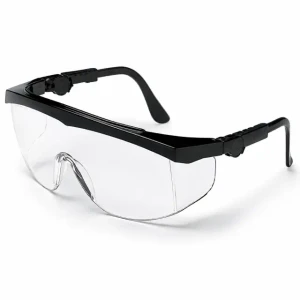


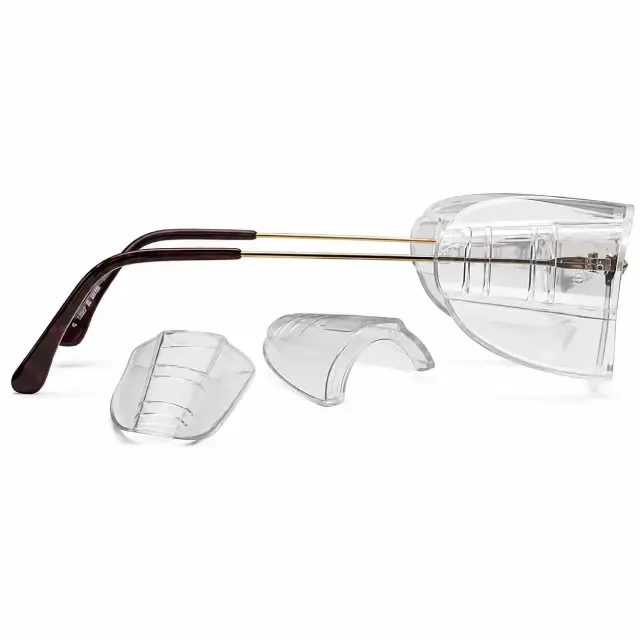
Workers and visitors who wear standard prescription glasses may need additional side coverage in certain workplace environments. These flexible safety glasses side shields are designed to slide onto thin eyewear temples quickly and securely, helping provide additional side protection without requiring tools, permanent modification or specialty eyewear.
The soft vinyl construction helps create a comfortable, form-fitting feel around compatible eyewear. Installation can be completed in under 30 seconds, making these side shields useful for visitor PPE stations, prescription eyewear users, facility safety programs, contractor onboarding and general industrial work areas.
For organizations that need a simple, affordable way to improve side coverage on compatible eyewear, these flexible slip organizations that need a simple, affordable way to improve side coverage on compatible eyewear, these flexible slip-on side shields offer a convenient solution that can be issued in bulk and kept on hand for daily workplace use.
Key Features
-
Flexible slip-on side shields for safety glasses and compatible prescription eyewear
-
Sold 6 pairs per box
-
One pair per pack for easy issuing and storage
-
Soft, flexible vinyl construction for comfort and durability
-
Designed to fit most safety glasses and eyeglasses with thin temples
-
Slides onto eyewear without tools, hardware or additional parts
-
Installs in under 30 seconds
-
Form-fitting design helps improve comfort and side coverage
-
Adds side protection without permanently modifying eyewear
-
Practical option for employees, visitors, contractors and temporary workers
-
Useful for prescription eyewear users who need added side coverage
-
Listed as compliant with ANSI Z87.1-2003 standards
Specifications
-
Product Type: Safety glasses side shields
-
Material: Soft flexible vinyl
-
Style: Slip-on / flexible side shield
-
Package Quantity: 6 pairs per box
-
Pack Format: One pair per pack
-
Installation: Tool-free
-
Install Time: Under 30 seconds
-
Compatibility: Most safety glasses and eyeglasses with thin temples
-
Use: Added side protection for compatible eyewear
-
Standard Listed: ANSI Z87.1-2003
Applications & Use
Flexible Safety Glasses Side Shields are useful in workplaces where employees, visitors or contractors need added side coverage for compatible eyewear. Common applications include:
-
Manufacturing facilities
-
Warehouse and logistics operations
-
Maintenance departments
-
Visitor PPE programs
-
Contractor onboarding
-
Industrial production areas
-
Assembly work
-
Inspection areas
-
Laboratories
-
Facility maintenance
-
Municipal and government facilities
-
Schools, training labs and technical programs
-
Prescription eyewear users in workplace safety programs
-
General eye protection stations
FAQ
What are flexible safety glasses side shields used for?
Flexible safety glasses side shields are used to add side coverage to compatible safety glasses or prescription eyewear. They help reduce exposure to side-entry hazards when properly fitted and used as part of an eye protection program.
Will these side shields fit prescription glasses?
They are designed to fit most safety glasses and eyeglasses with thin temples, including many prescription eyewear styles. Fit should always be checked before use.
Do I need tools to install them?
No. These side shields slide onto compatible eyewear temples without tools, hardware or additional parts.
How many pairs come in a box?
Each box includes 6 pairs of flexible side shields, with one pair per pack for easy distribution.
What material are they made from?
They are made from soft, flexible vinyl designed to provide comfort, durability and a form-fitting feel around compatible eyewear.
Are these side shields ANSI compliant?
The product is listed as compliant with ANSI Z87.1-2003 standards. Always verify the current product documentation and confirm that the complete eyewear setup meets the requirements of your workplace safety program.
Can these replace safety goggles?
No. Side shields do not replace safety goggles, sealed eyewear or face protection when those are required. The correct eye and face protection should always be selected based on the specific hazard.