


Dec 26th 2025
Smart Manufacturing in 2026 and beyond
Smart Manufacturing: What It Is, Where It’s Used, and the PPE That Keeps Workers Safe
Smart manufacturing is no longer a future concept; it’s the operational standard for competitive industries. Modern facilities are integrating robotics, automated assembly systems, IoT sensors, digital twins, predictive maintenance technology, and AI-driven diagnostics to reduce cycle times, increase precision, and minimize human exposure to risk. Each piece of technology changes how people work—and the PPE they require to do that work safely.
Smart manufacturing does not remove the need for human workers; it changes their role. Robotics and connected systems handle repetitive or hazardous processes, but people are still responsible for oversight, adjustment, equipment intervention, and emergency response. That means PPE must evolve alongside the technology. In smart industrial environments, workers routinely wear anti-fog eye protection for computer-vision areas, cut-resistant gloves for robotic loading stations, and respirators where automated welding or chemical processes are operating.
Where Smart Manufacturing Is Being Implemented
Smart manufacturing is expanding fastest where production speed, digital traceability, and workplace safety intersect with regulatory or cost pressures.
In the automotive and EV manufacturing sector, robotic welding stations, automated battery assembly lines, and AI-based inspections require protective equipment that supports heat, voltage, and particulate exposure. Workers typically wear auto-darkening welding helmets, FR-rated clothing for arc flash zones, cut-resistant gloves near robotic arms, and respirators in paint and weld bays—because even with automation, those hazards remain present.
The aerospace and defense industry uses digital machining, torque-control automation, and contamination-managed assembly, which drives specific PPE requirements. Cleanroom or anti-static coveralls, nitrile gloves for surface protection, impact-resistant eyewear near automated mills, and reliable hearing protection are common. Even with precision robotics, human technicians must safely enter motion ranges and tool paths.
In food and beverage production, smart packaging systems and conveyor-based inspection reduce manual handling, but workers still need food-grade nitrile gloves, slip-resistant footwear, disposable protective clothing, and face shields or goggles in sanitation areas—particularly where automated cleaning chemicals or temperature controls are monitored by connected systems.
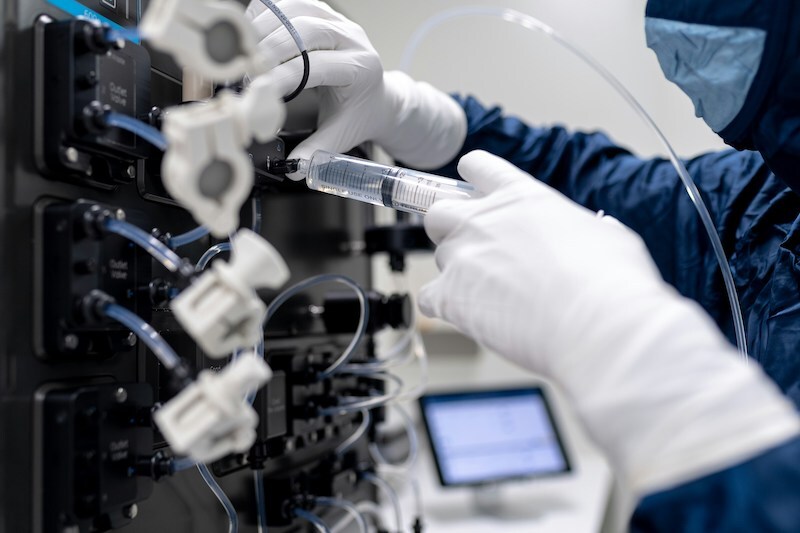
The pharmaceutical and medical device sector ties automation to sterility. PPE here is both a safety measure and part of the manufacturing protocol. Facilities commonly rely on Tyvek suits in sterile zones, chemical-rated goggles in compounding rooms, and full or half-mask respirators when automated ventilation or dispensing systems manipulate powders, solvents, or biohazards.
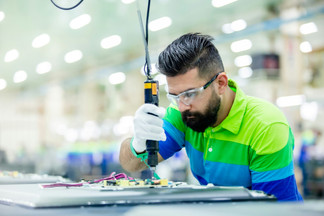
Electronics and semiconductor facilities integrate cleanrooms, robot-assisted placements, and ESD-controlled equipment. Because a single discharge can ruin microcomponents, workers in these facilities generally wear ESD-safe gloves, cleanroom garments, anti-fog glasses for machine-vision lines, and conductive footwear or heel straps for grounded work surfaces.
Even warehousing, logistics, and distribution—thanks to smart forklifts, wearable barcode tech, and automated pallet storage—requires protective gear. High-visibility apparel is still essential for traffic areas, along with composite-toe boots for forklift lanes, hard hats where autonomous stacks operate overhead, and impact-rated gloves when handling goods next to robotic retrieval systems.
Why PPE Still Matters in Automated Facilities
There’s a misconception that automation eliminates physical hazards, but smart data trends show the opposite. When systems run faster and more efficiently, mistakes—while less frequent—carry higher consequences. A single entry into a robotic arm radius, a conveyor pinch point, a chemical sanitation cycle, or a high-voltage error can escalate quickly without the right safety gear. So even in a smart facility, PPE remains the frontline protection.
Regulatory expectations reinforce this. OSHA, ANSI, NFPA, and industry-specific standards still apply even when robotics or connected equipment handle the initial task. PPE protects the operator, the technician performing adjustments, the mechanic managing predictive maintenance alerts, and the supervisor entering automated zones to reset or override equipment.
What PPE is required in a smart manufacturing facility?
Smart facilities typically require protective eyewear for automation zones, gloves designed for cut or impact hazards near robotics, respirators in areas with fumes or particulates, FR-rated clothing in electrical or welding environments, and high-visibility or hard hats where automated machinery and forklifts operate.
Does automation reduce the need for PPE?
Automation reduces direct worker exposure but does not remove risk. PPE is still required because humans remain responsible for oversight, maintenance, troubleshooting equipment, and responding when automated systems malfunction or enter fault mode.
How does PPE support predictive maintenance and smart equipment?
Predictive maintenance alerts technicians before failure occurs, but PPE—such as dielectric boots, arc flash clothing, respirators, or chemical-resistant gloves—protects them during the actual intervention, especially when entering powered or hazardous zones.
Which industries benefit most from smart manufacturing PPE?
Automotive, aerospace, food production, pharmaceuticals, semiconductors, warehousing, logistics, and chemical processing all rely on PPE to ensure compliance while robotics and automation increase operational speed.
Smart manufacturing increases efficiency and consistency, but the workforce still enters operational space where robotics, energy, chemicals, and automated systems interact. Technology lowers the frequency of incidents; PPE lowers the severity. Both are required for safe, modern production.
If your operation is modernizing or expanding automation, now is the time to tighten your PPE program.